
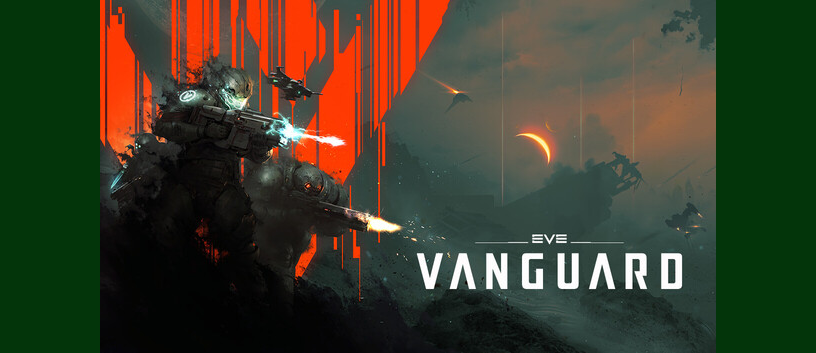
EVE: Vanguard is an extraction-adventure FPS set on the ruthless planets of New Eden. Raid crash sites, assault forward bases and seize exotic tech before colossal Nemesis Drones hunt you down. Every mission is a race against time. Every extraction shapes a larger war. This is only the beginning.
Steam Page: https://store.steampowered.com/app/1872800/EVE_Vanguard/
Role: Level Designer
Responsibilities:
Blockout (Whiteboxing and Greyboxing)
Combat Arena Design
AI Encounter Design
Player Flow and Traversal Design
Mission Design
Programs Used:
Unreal Engine 5
Perforce
Photoshop
Gaea
Jira
Confluence
Miro
Team Size: 60
Level Design Team: 1-4
Map Creation Team: 10-15
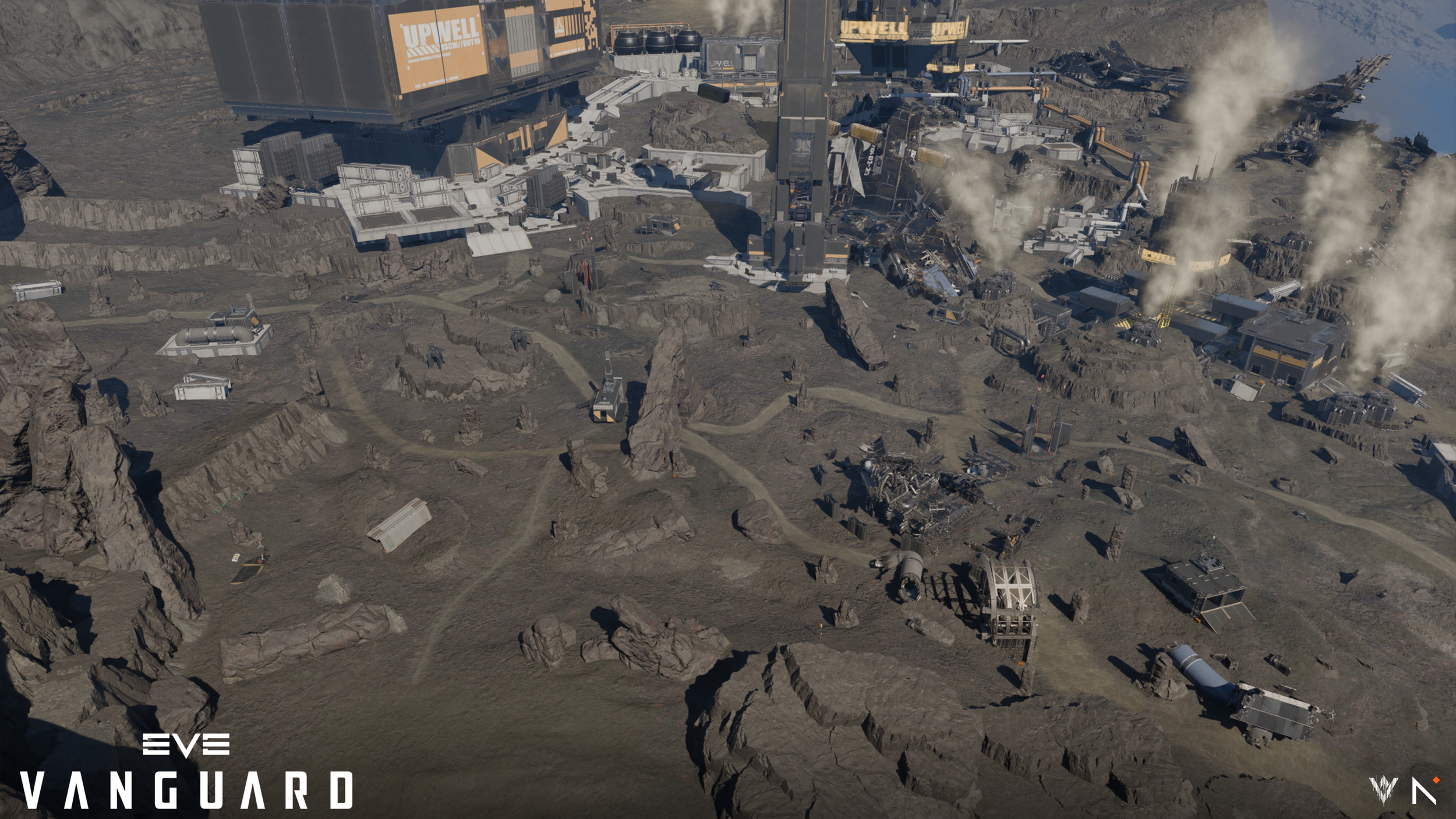
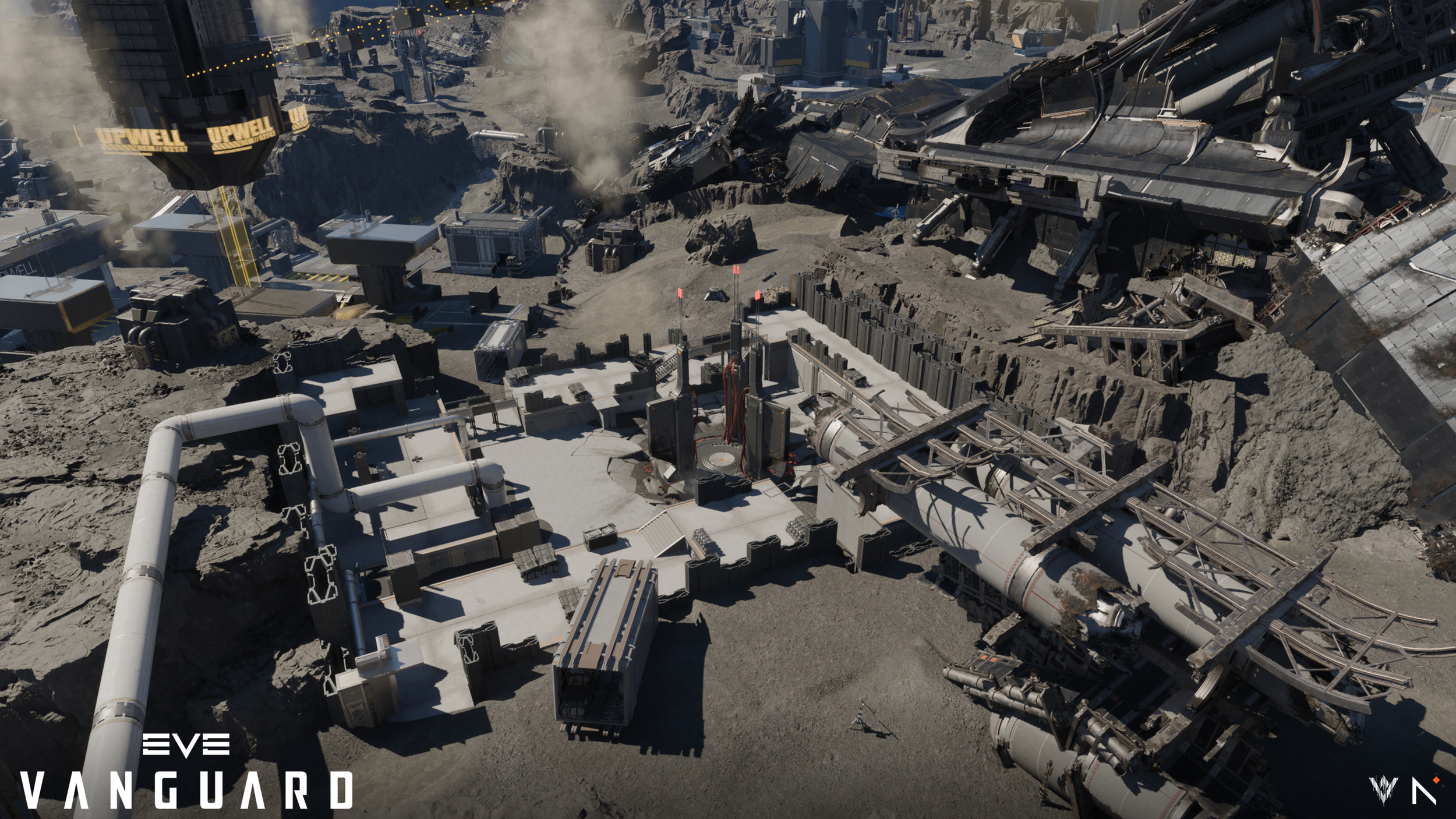
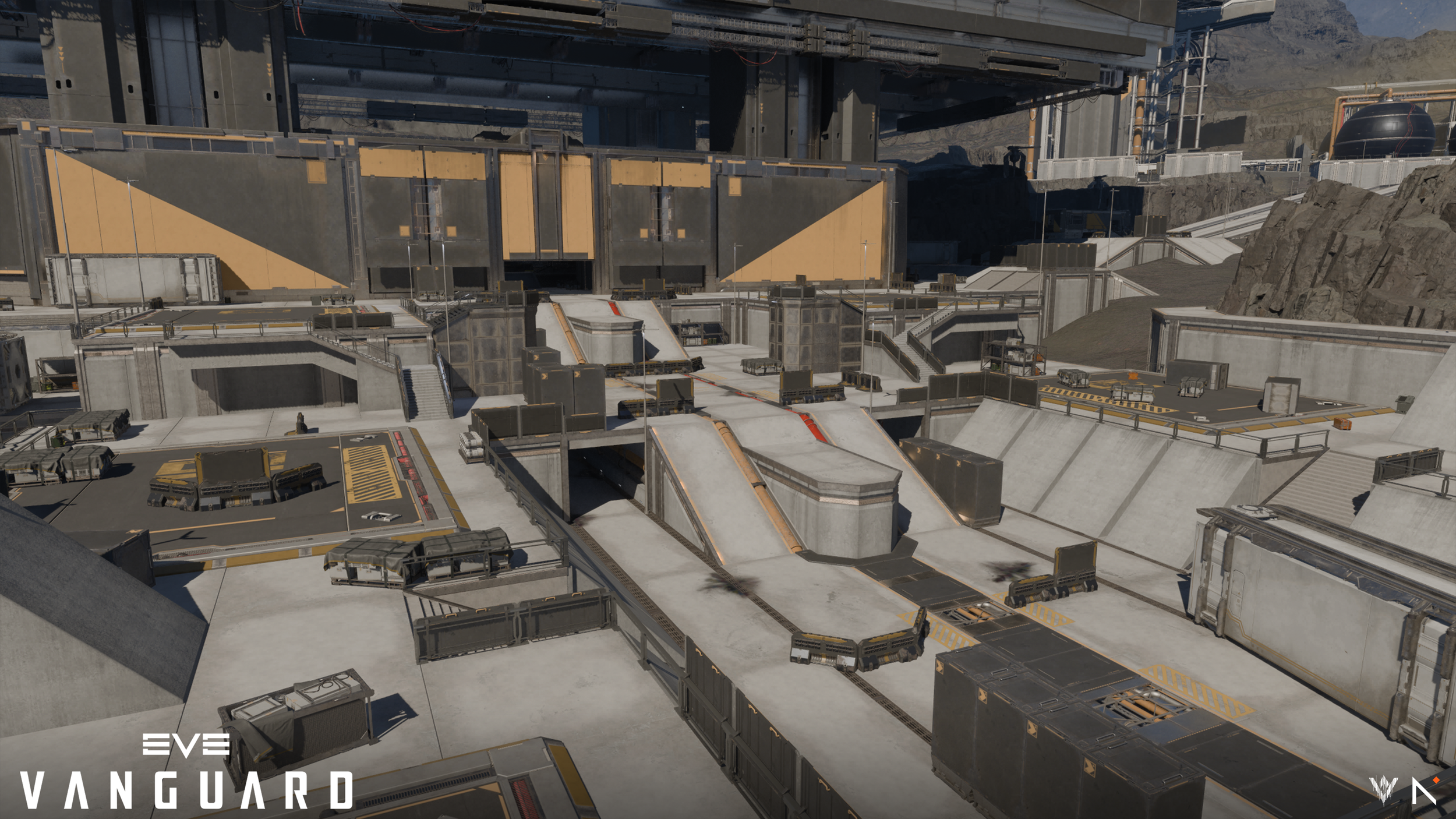
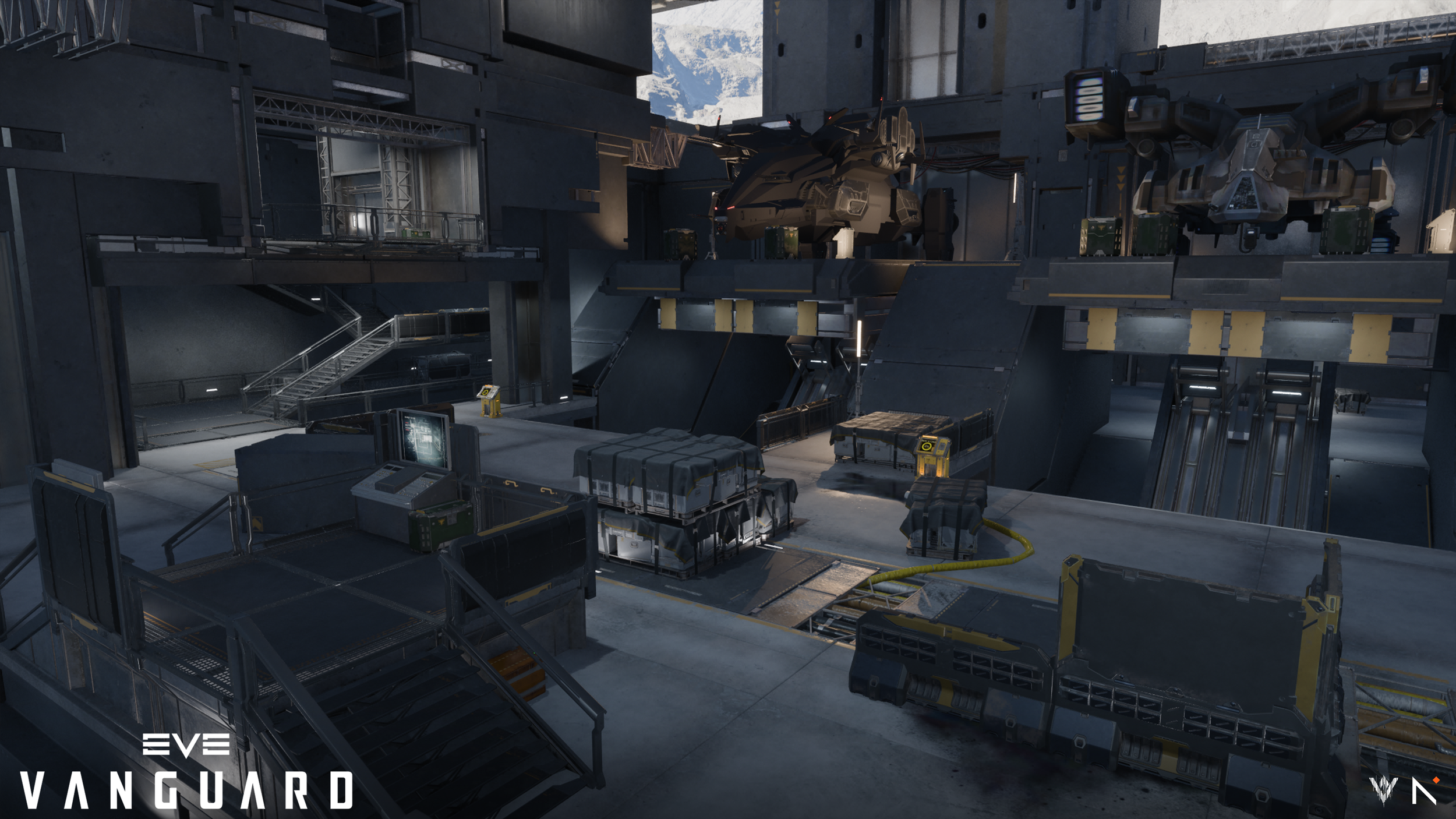
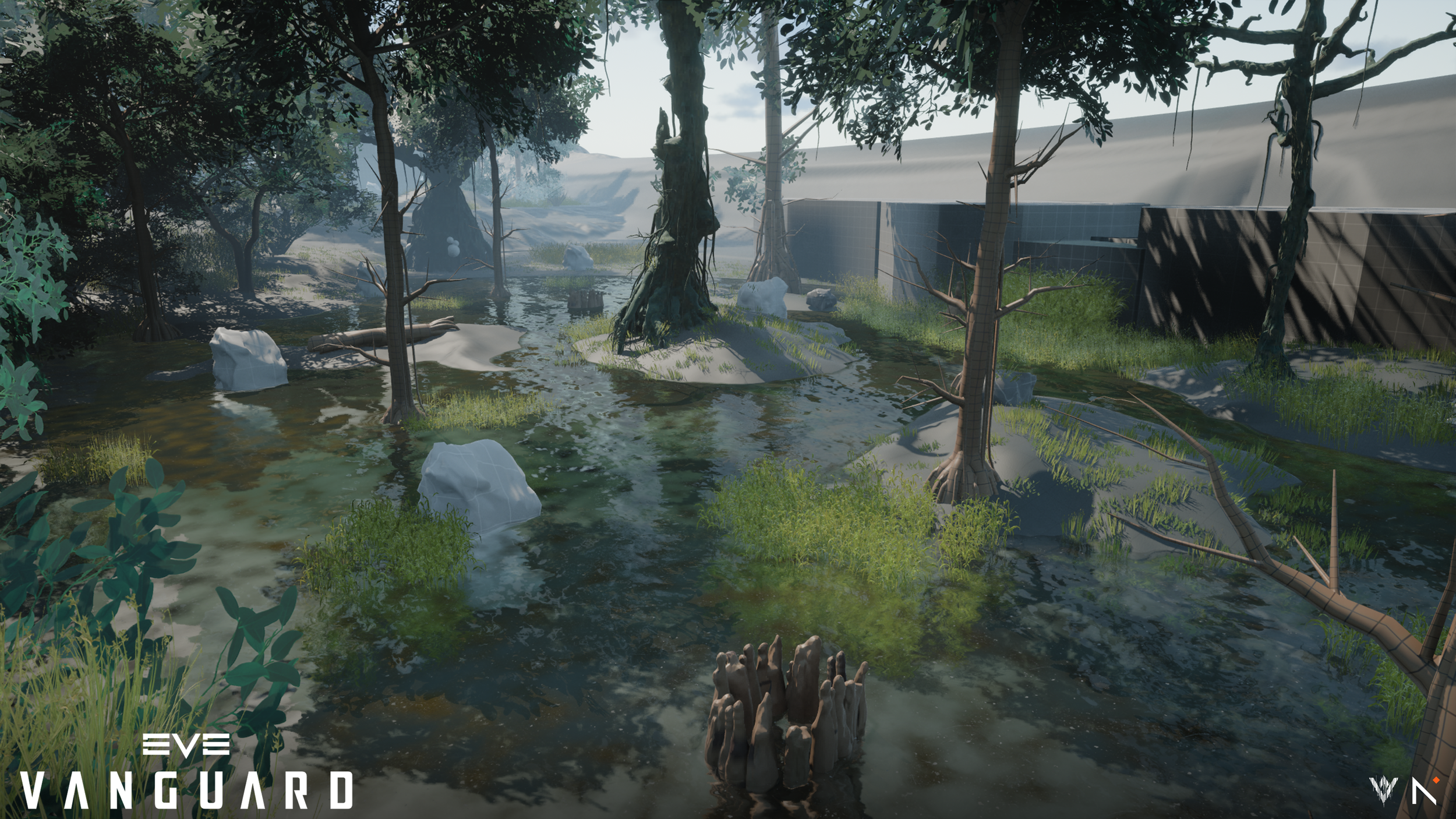
What I produced:
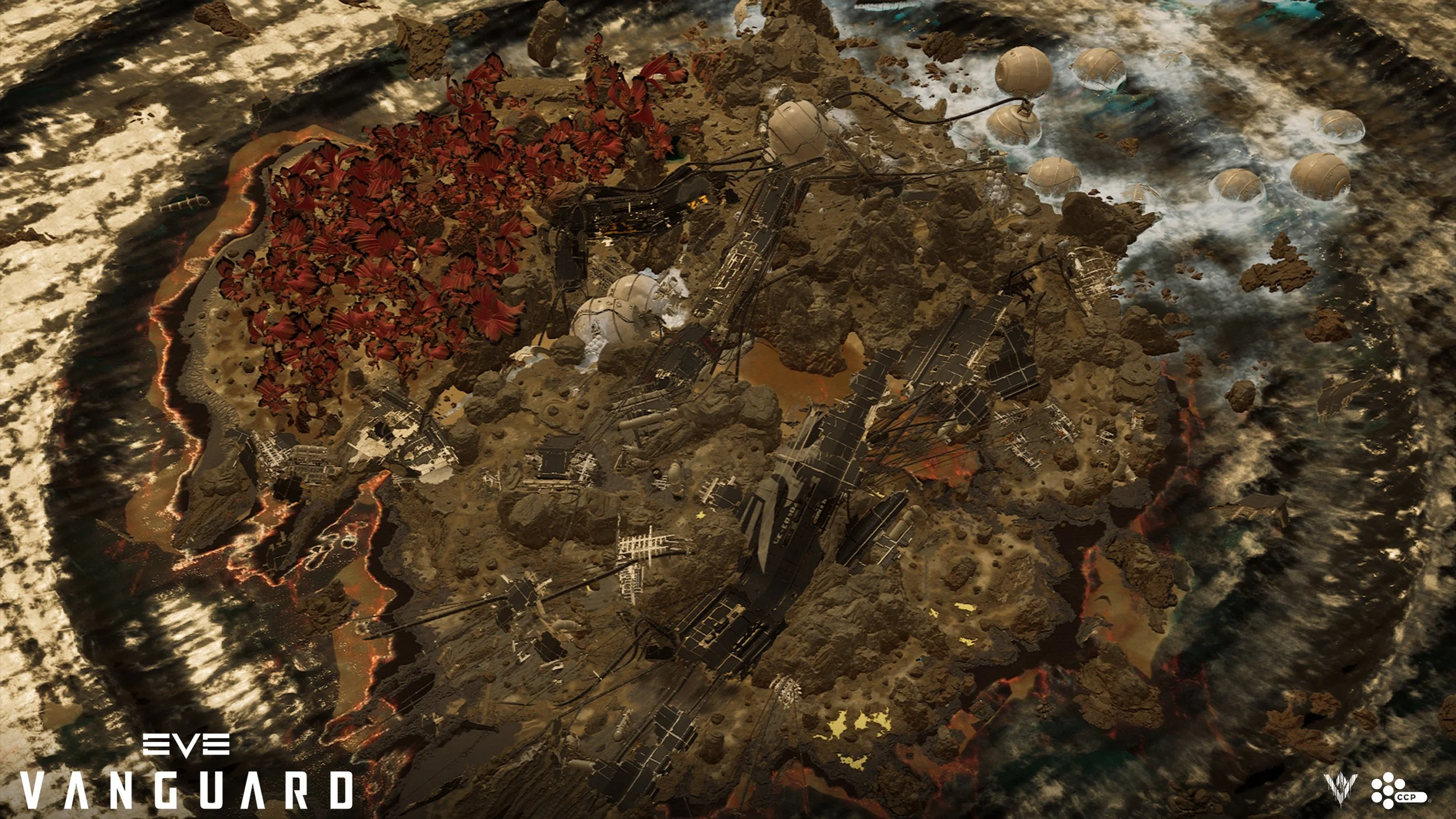
9 Multiplayer Maps
6 Released
3 still in development
Over 60 Points of Interest, including:
13 Major Locations
4 Flagship Locations
Four Map Variants featuring:
Unique AI encounter layouts
Mission designs
Loot distributions
Weather conditions and lighting setups
Modular Landscape Creation Pipeline alongside the Technical Art Team
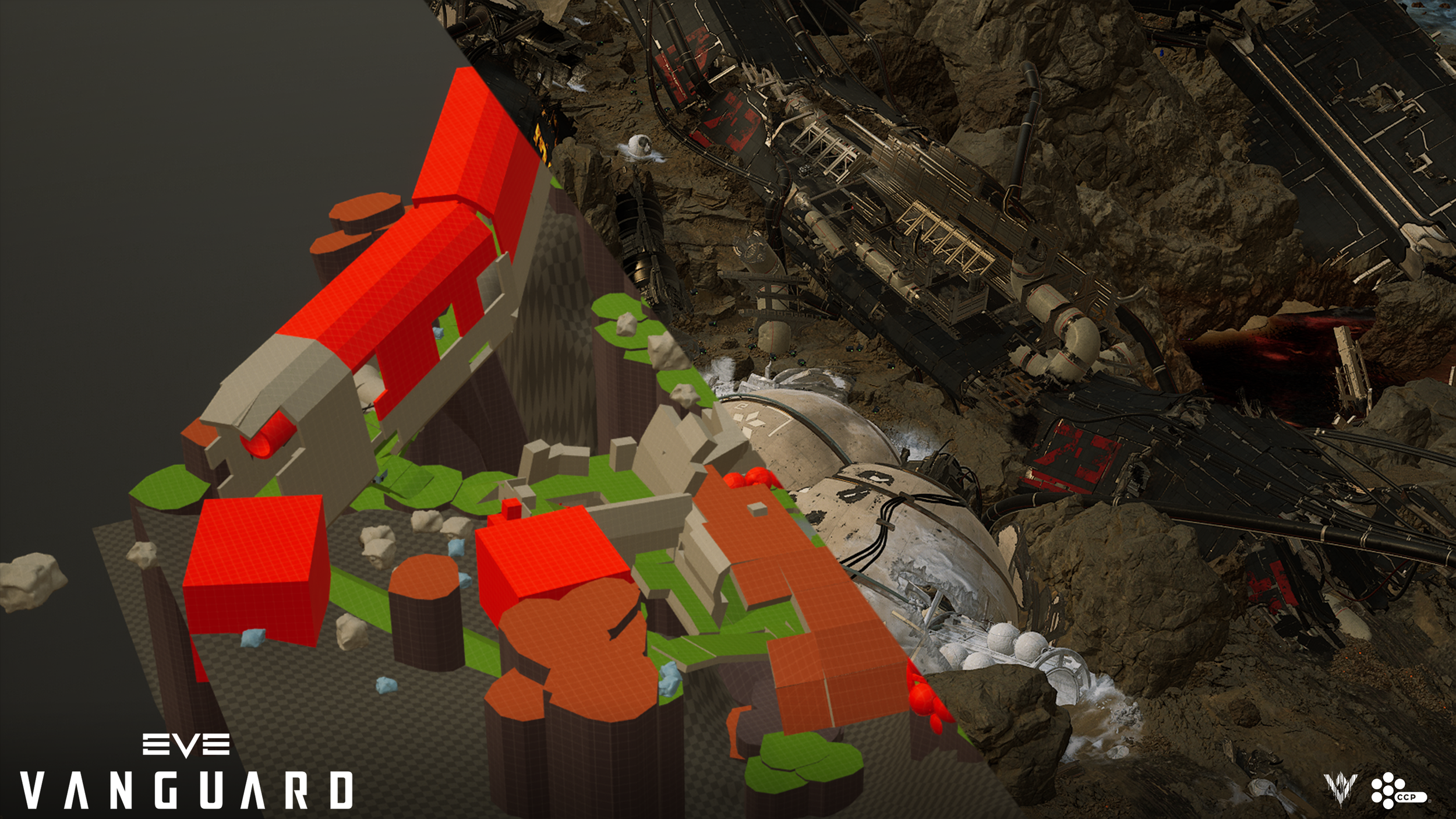
My Process
Every map I worked on started as a collaboration between the Level Design, Environment Art, and Technical Art teams. We would collaborate and decide on map themes, sizes, POIs, and technical limitations before starting any work.
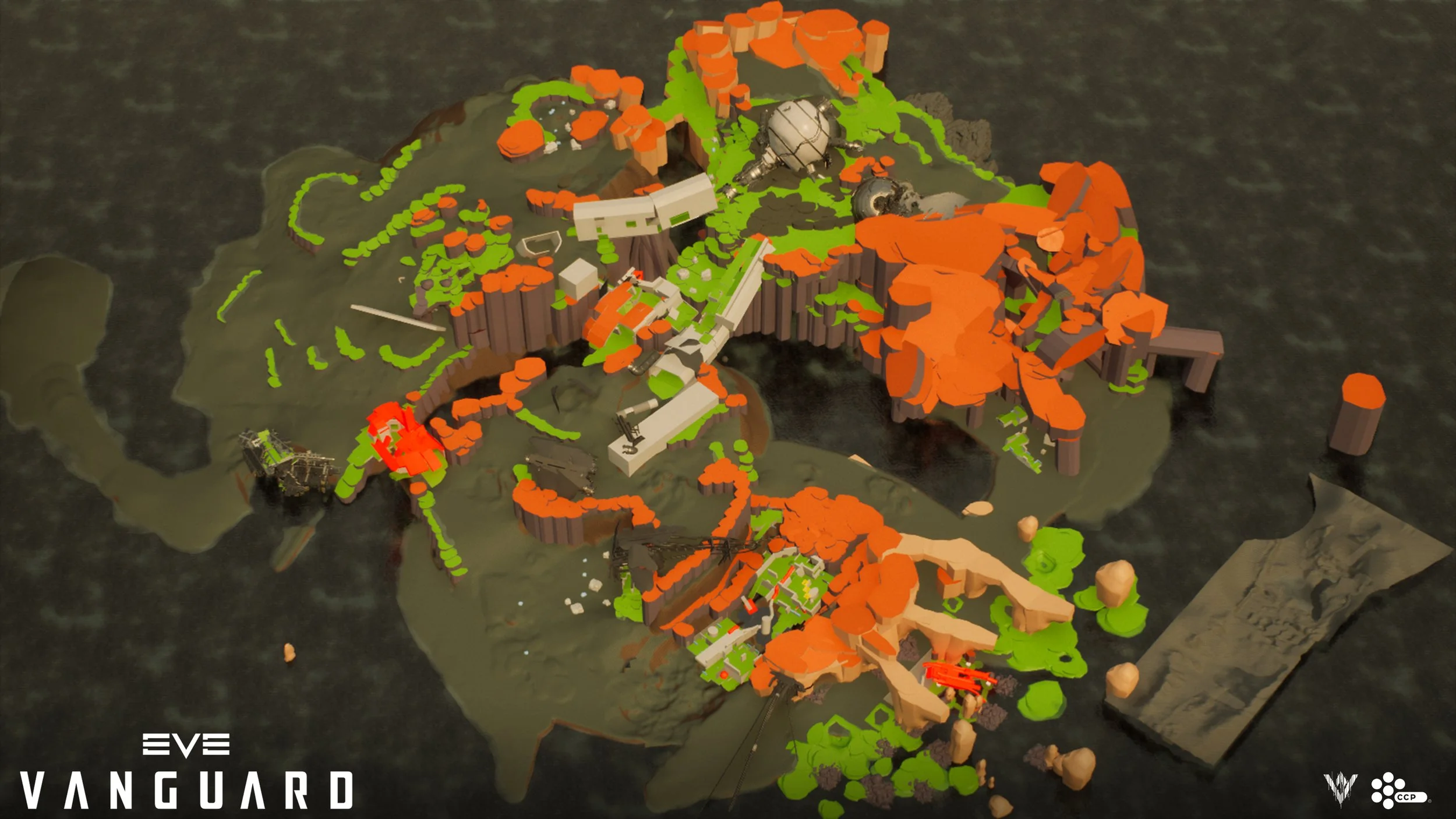
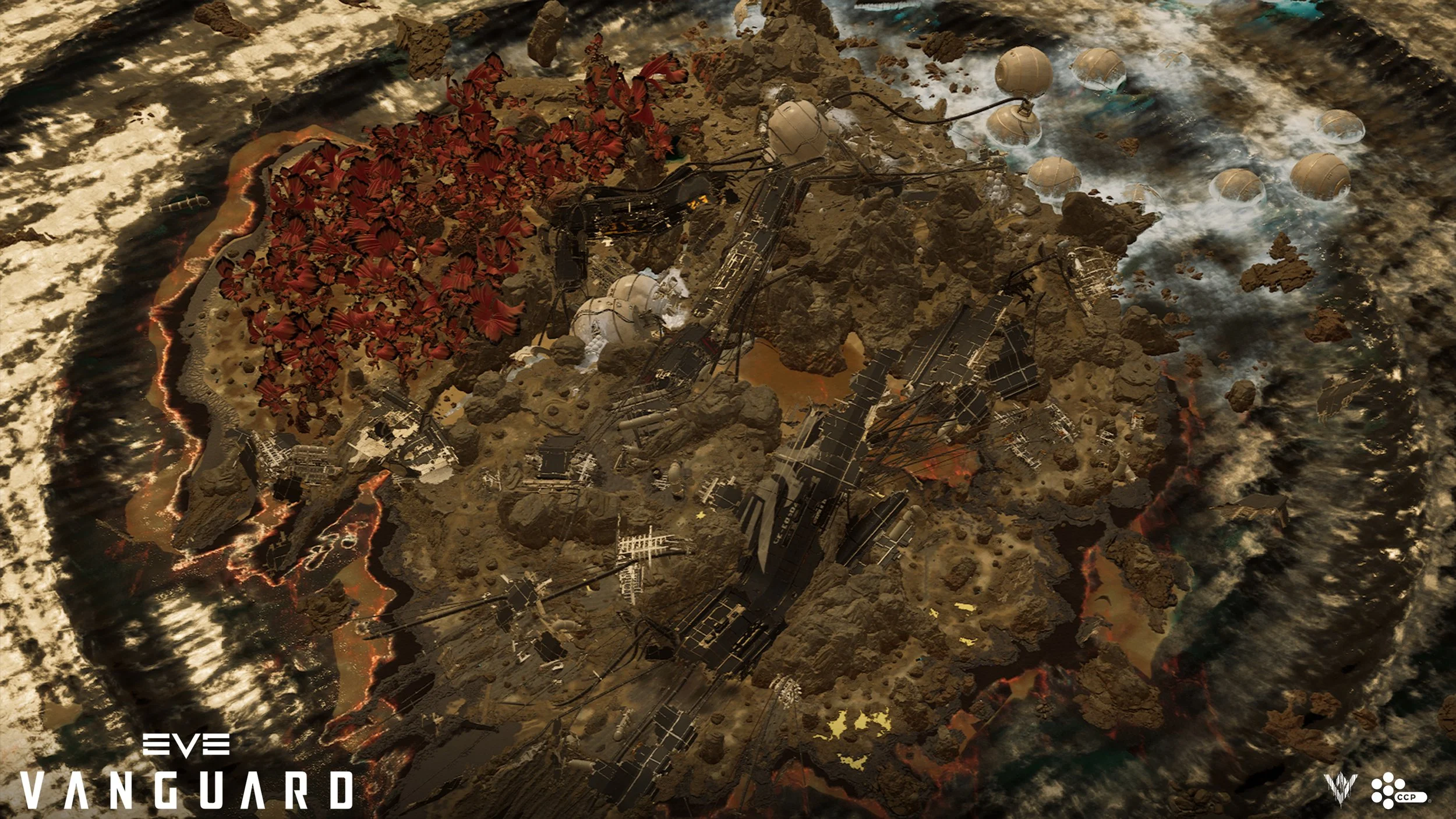
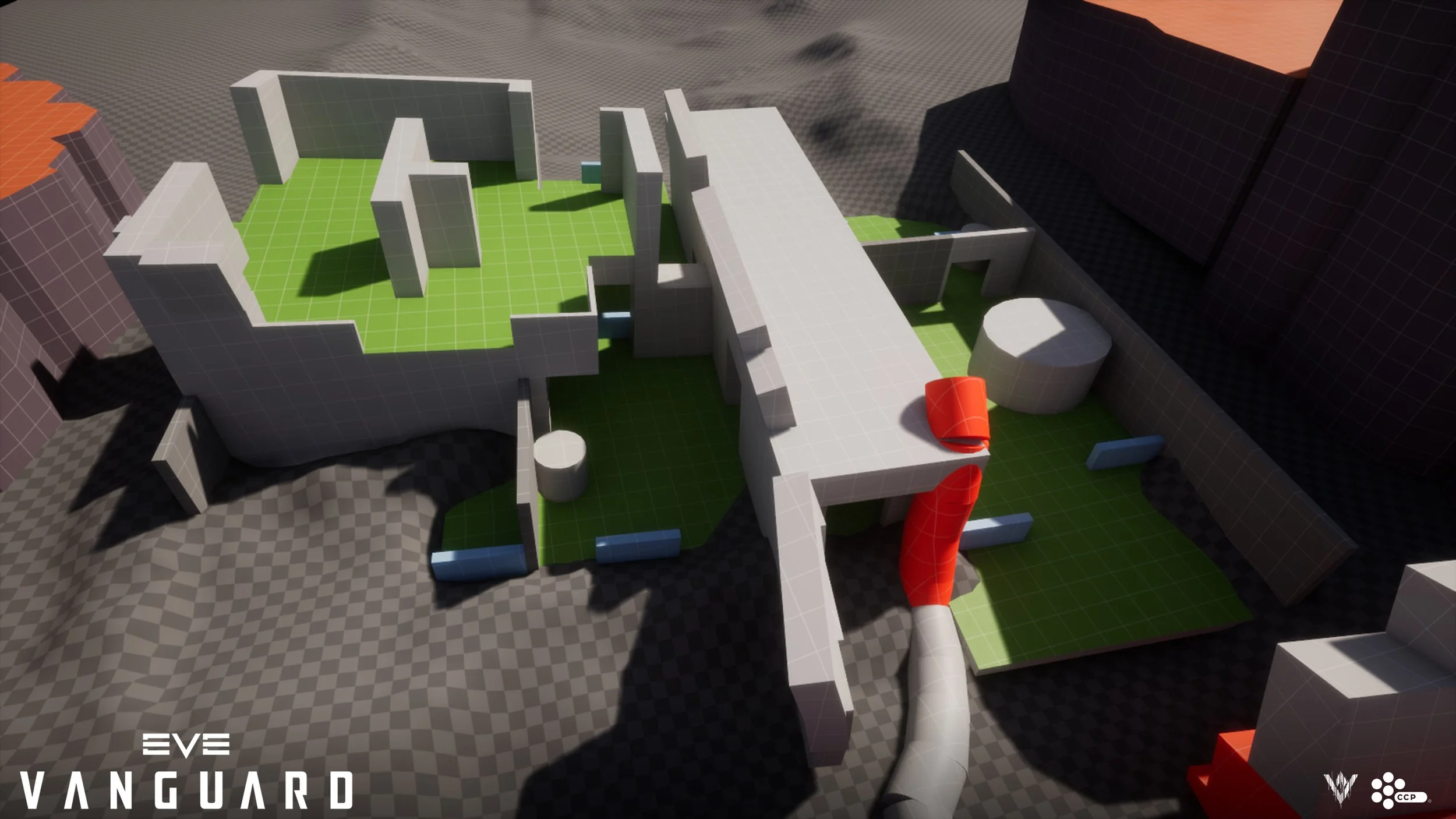
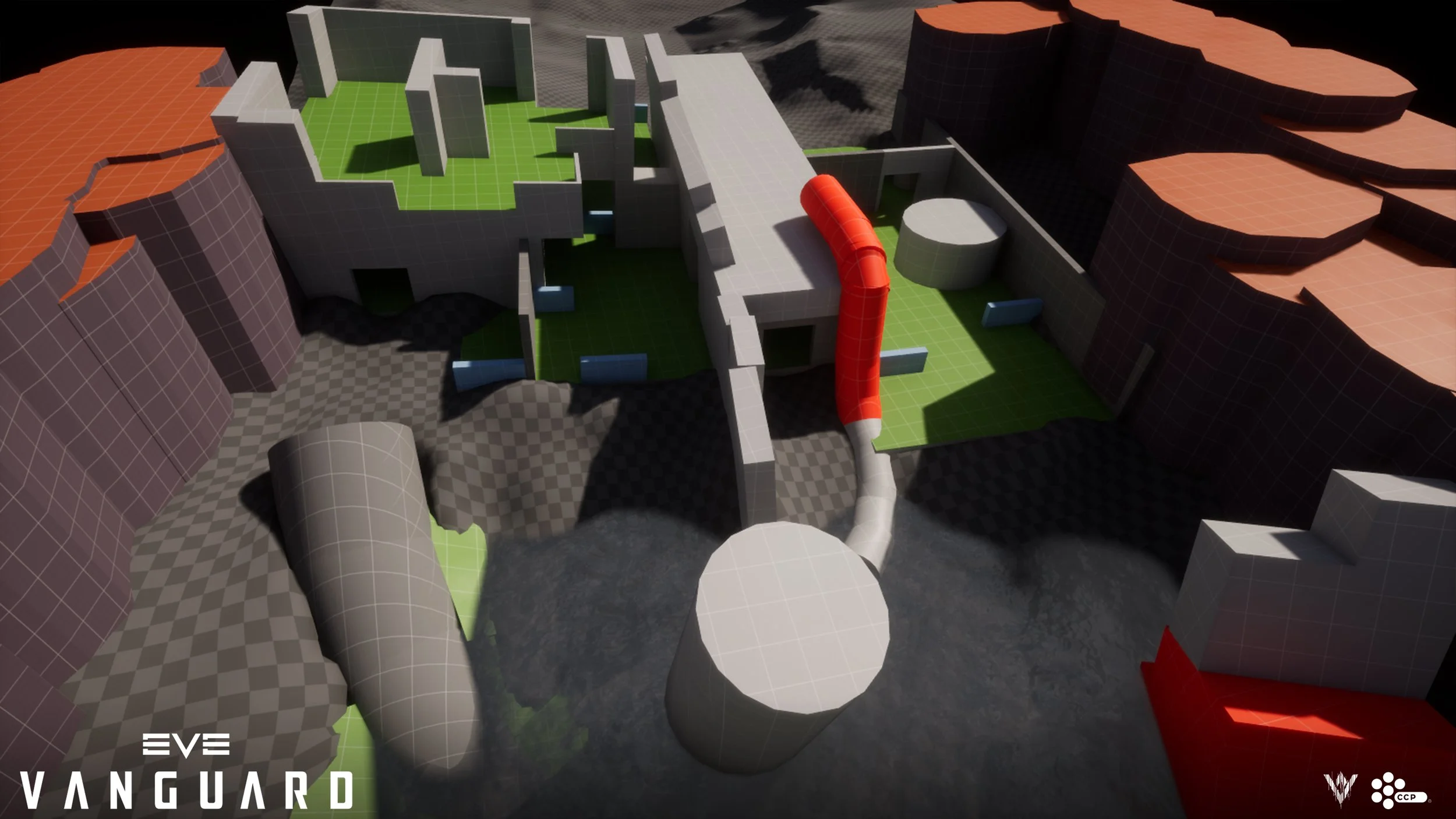
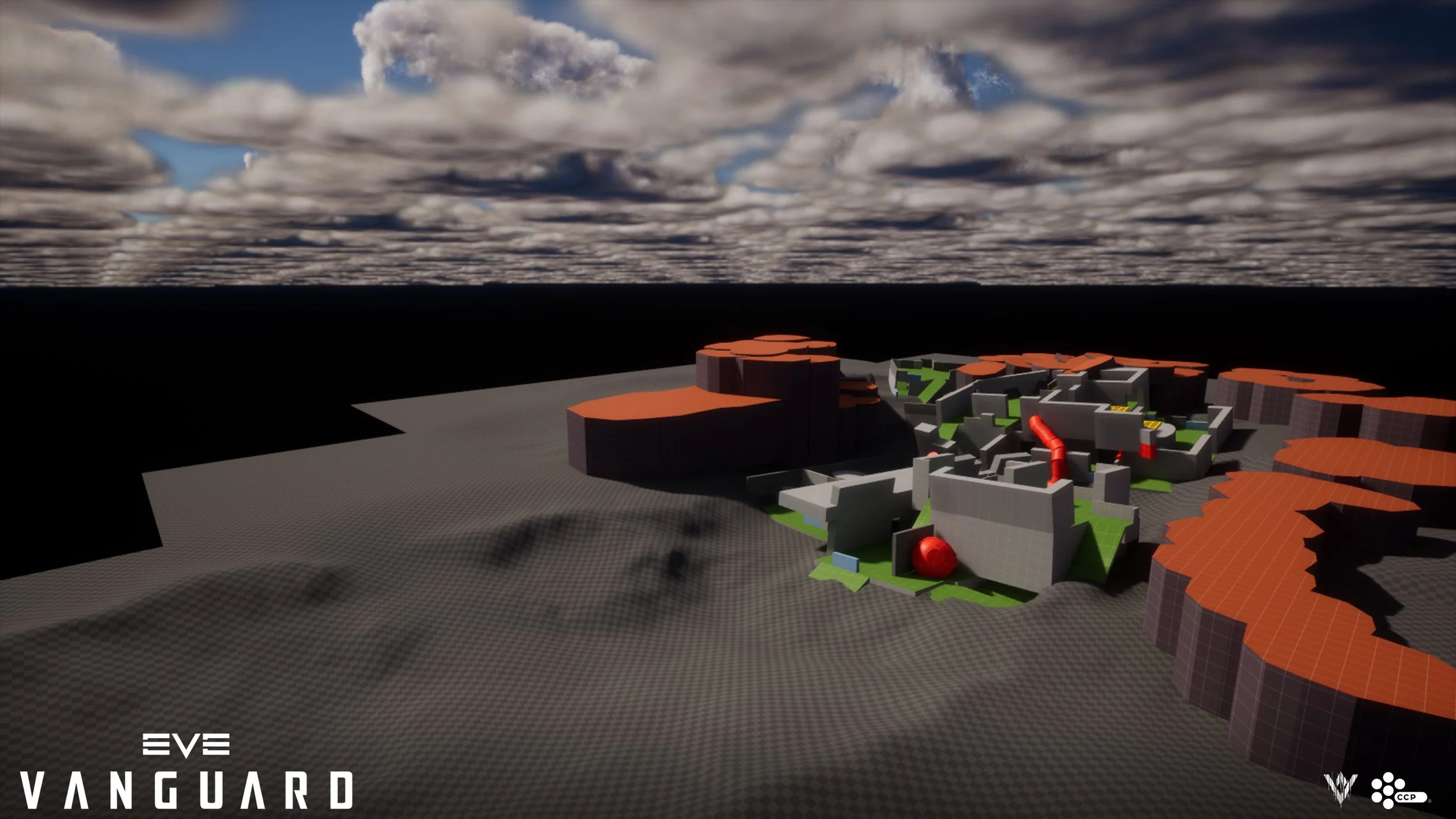
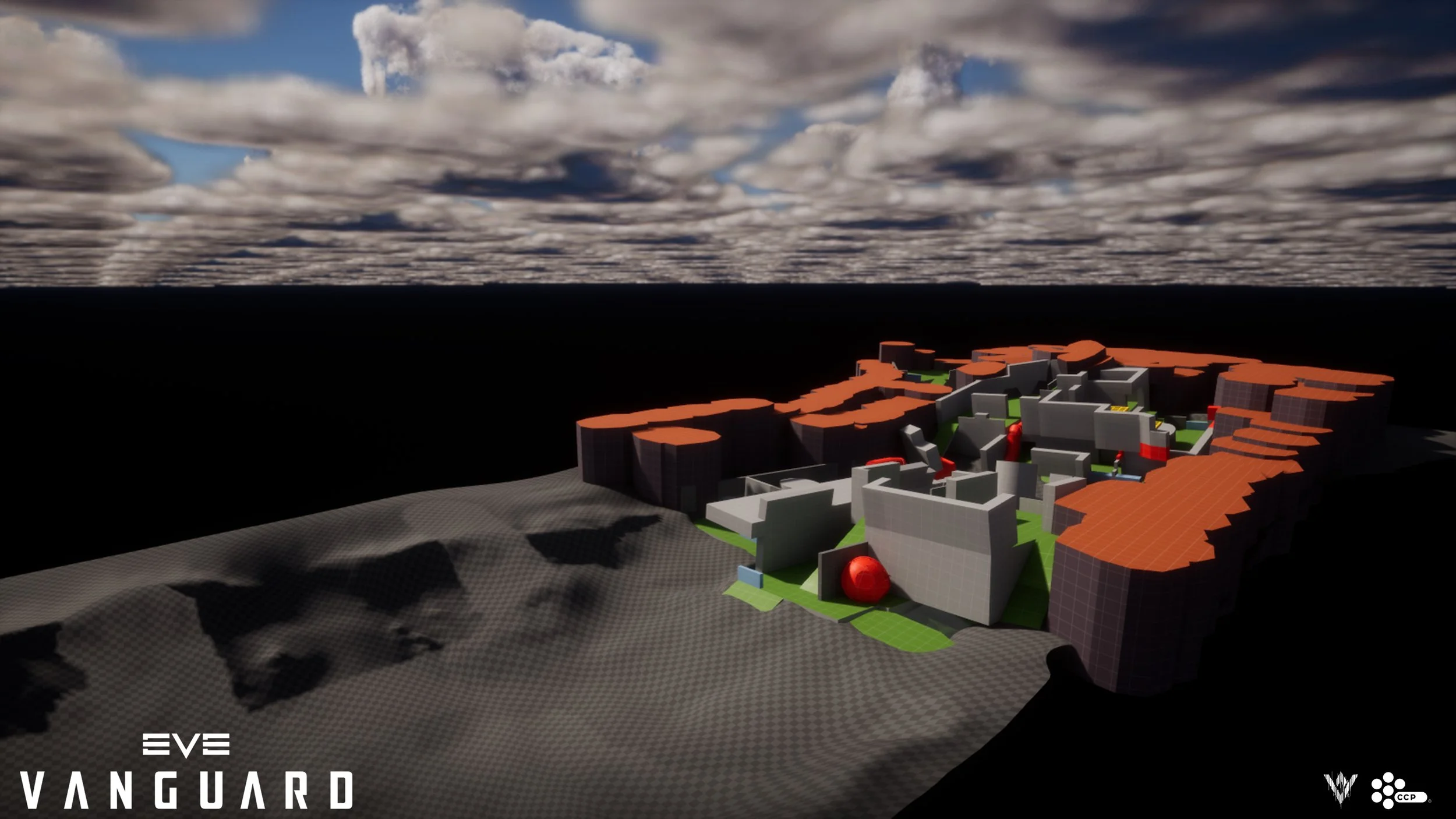
After deciding on these initial points, I would then move on to early blockout stages, trying to find the correct spacing, pacing, and player flow for the level. Once this rough outline of the level was completed, I would coordinate with the Concept Art team, who would create paint-overs to help the Level Design team finalize the details of the level layout. Blockout would then continue as we added more and more detail to traversal spaces.
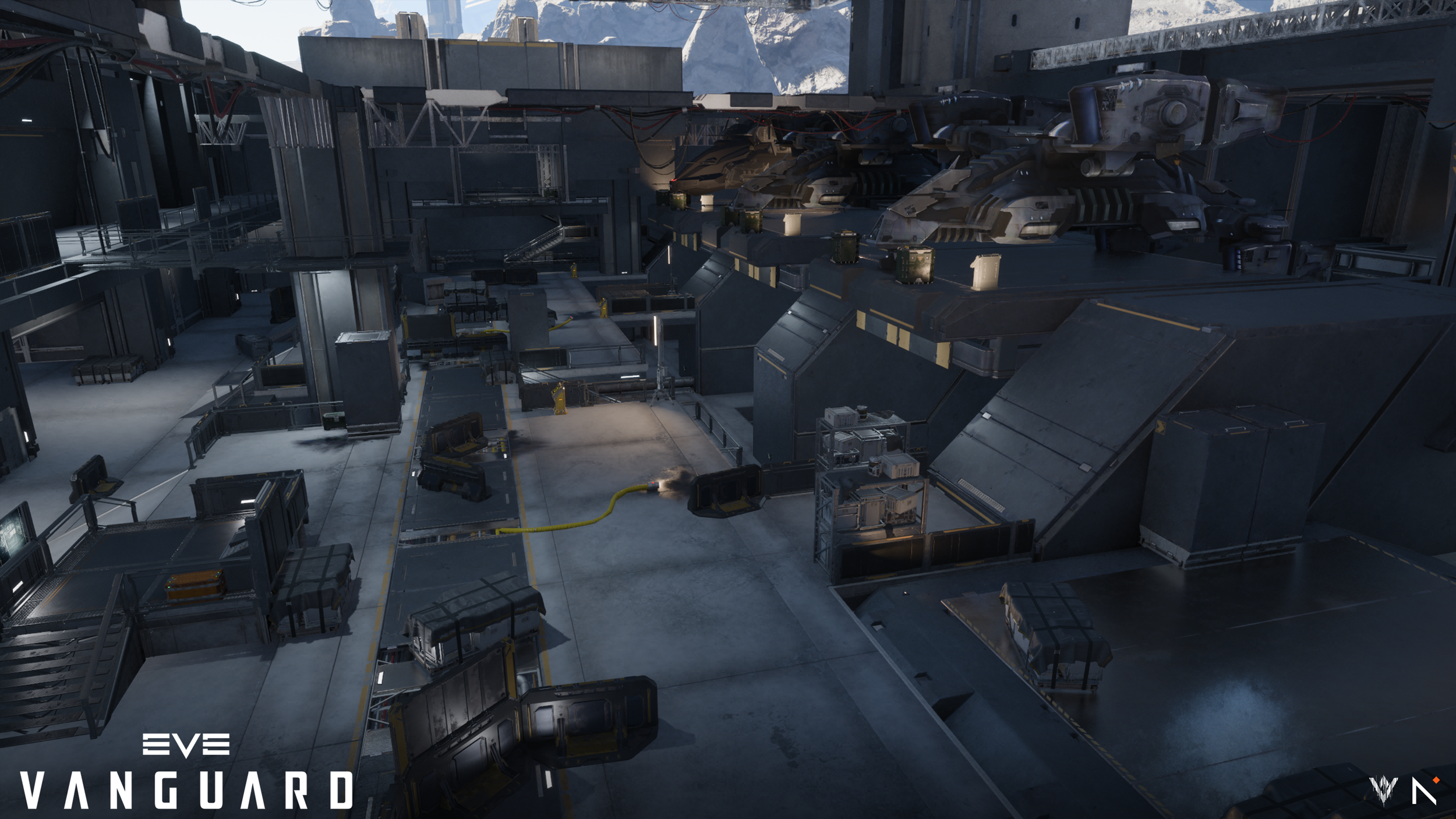
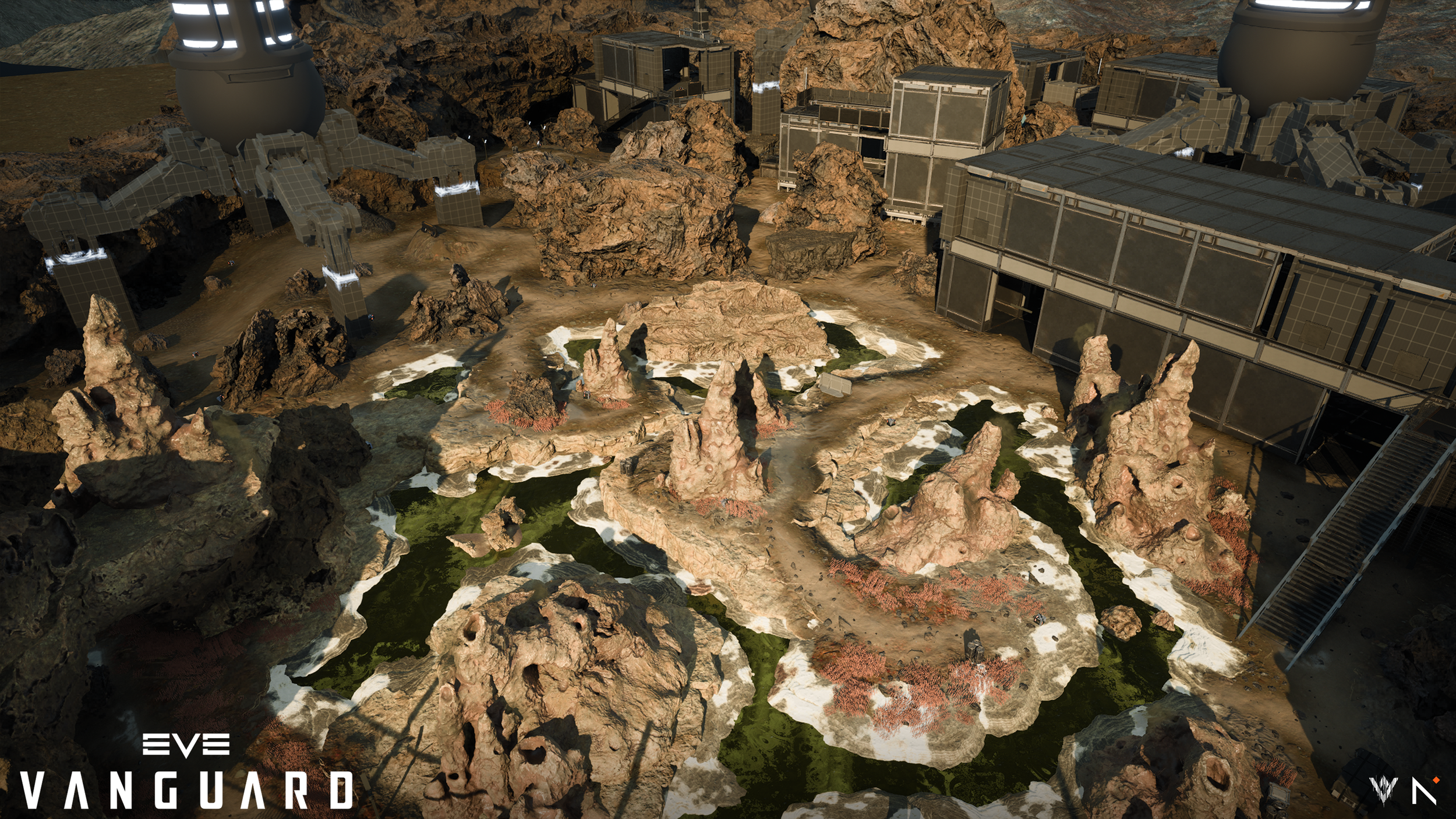
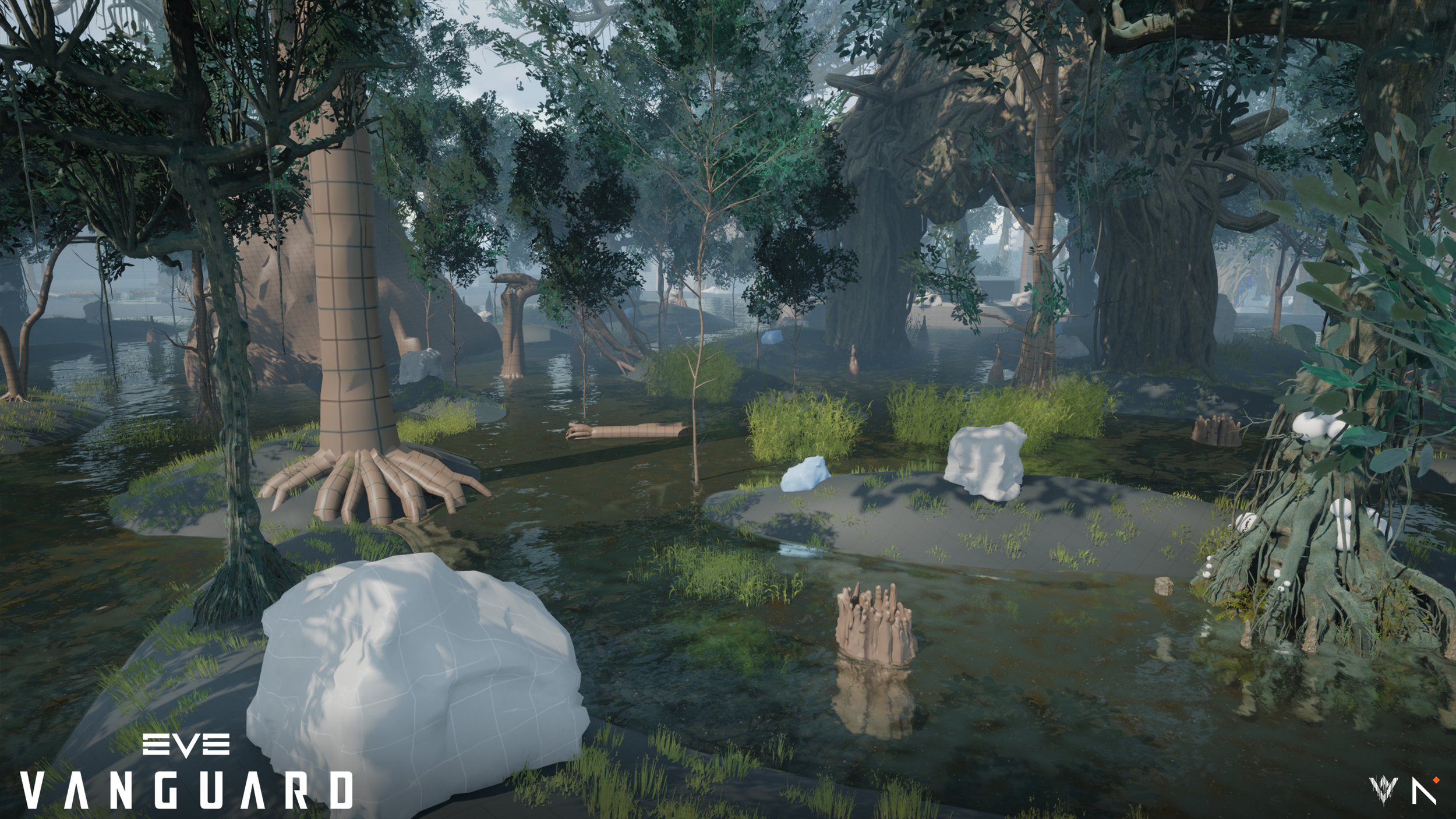
Throughout this process I would also be working on blocking out POIs for the level. Many of the POIs created were made independent of the maps, created before or during the development of the main map using level instances, then integrated using custom landscape patches that would align the terrain to where it needed to be for the POI. While designing them, I would work closely with our narrative and environment art teams as we decided what these POIs would be and how they would integrate into the level.
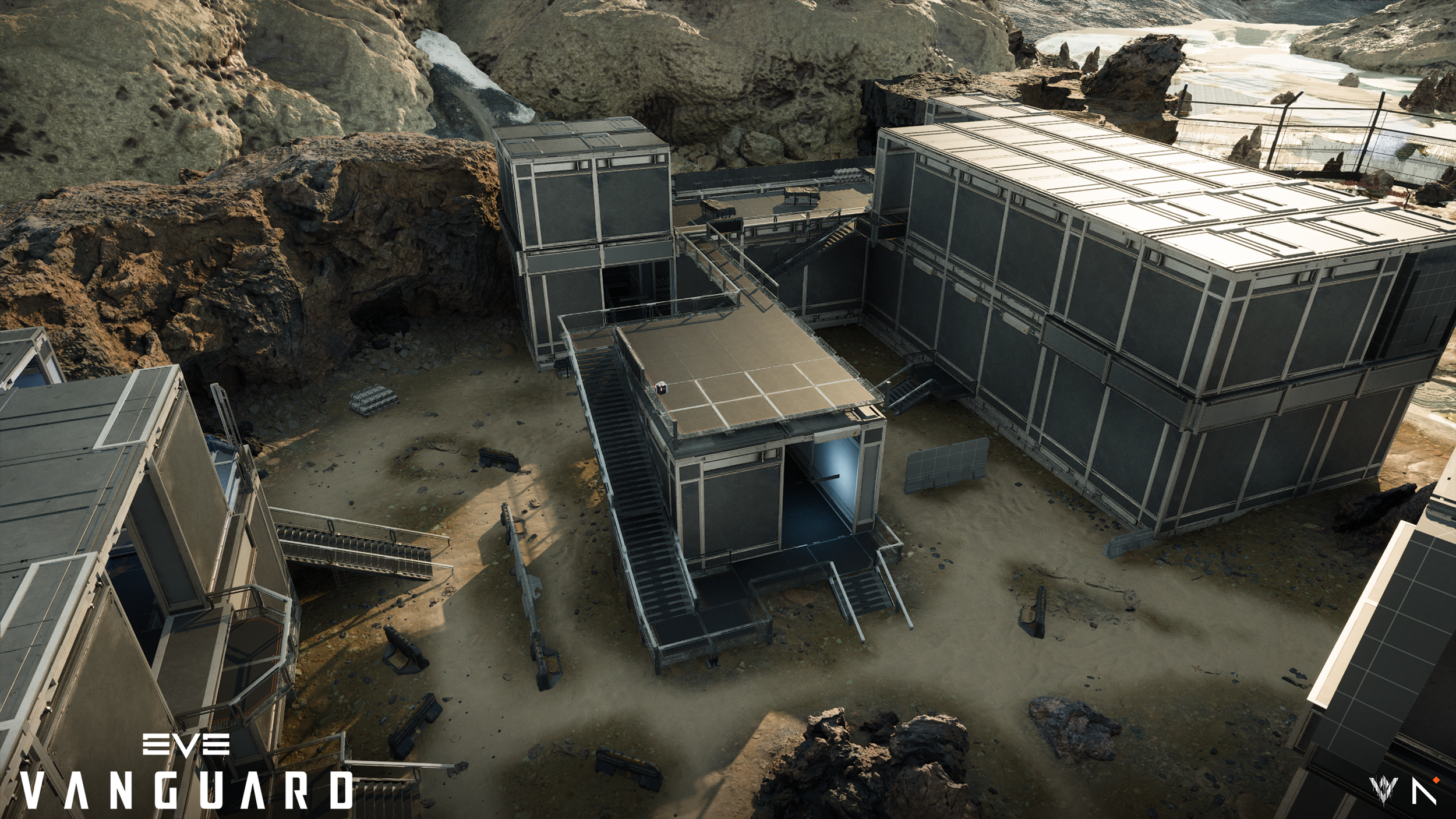
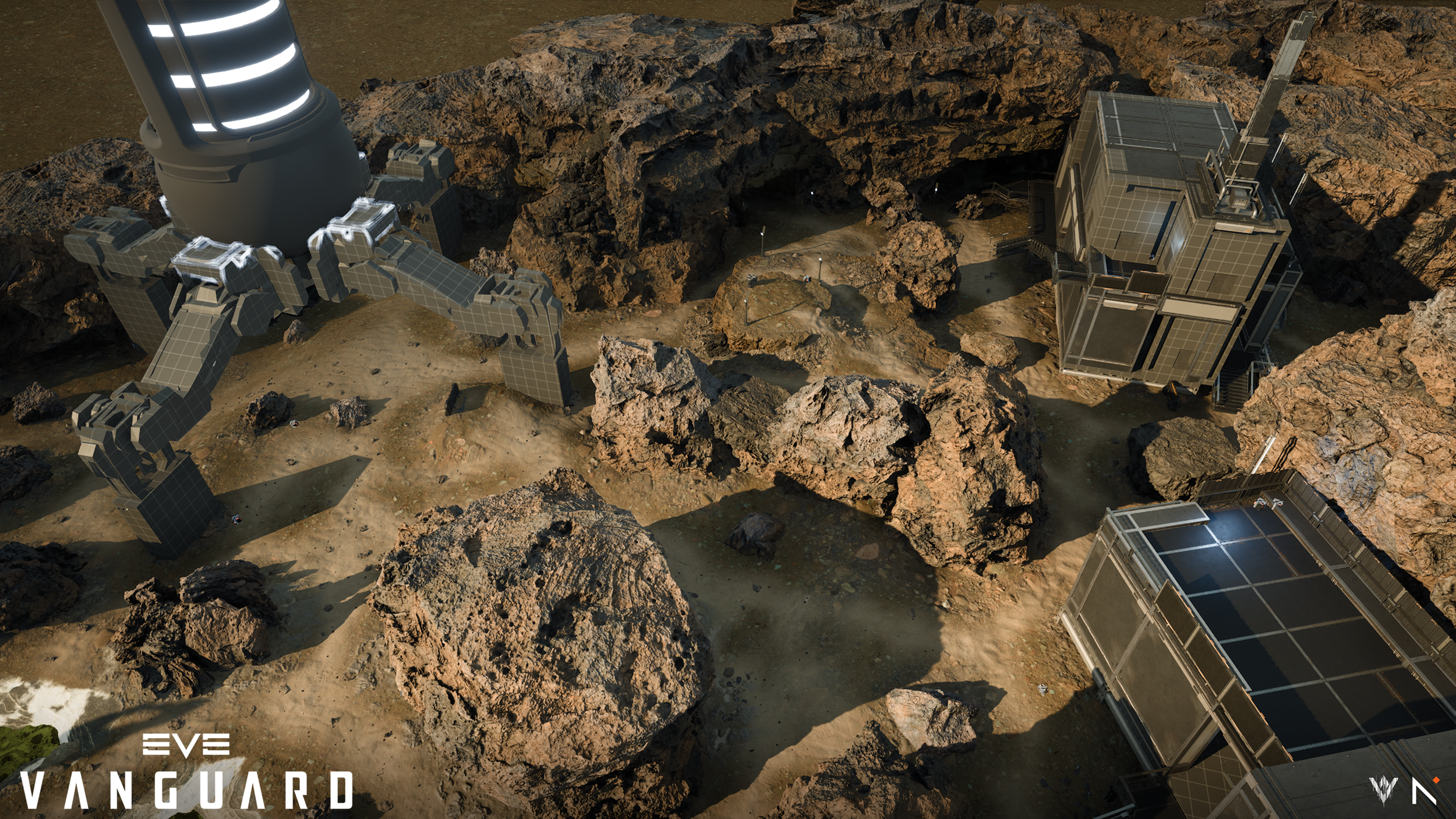
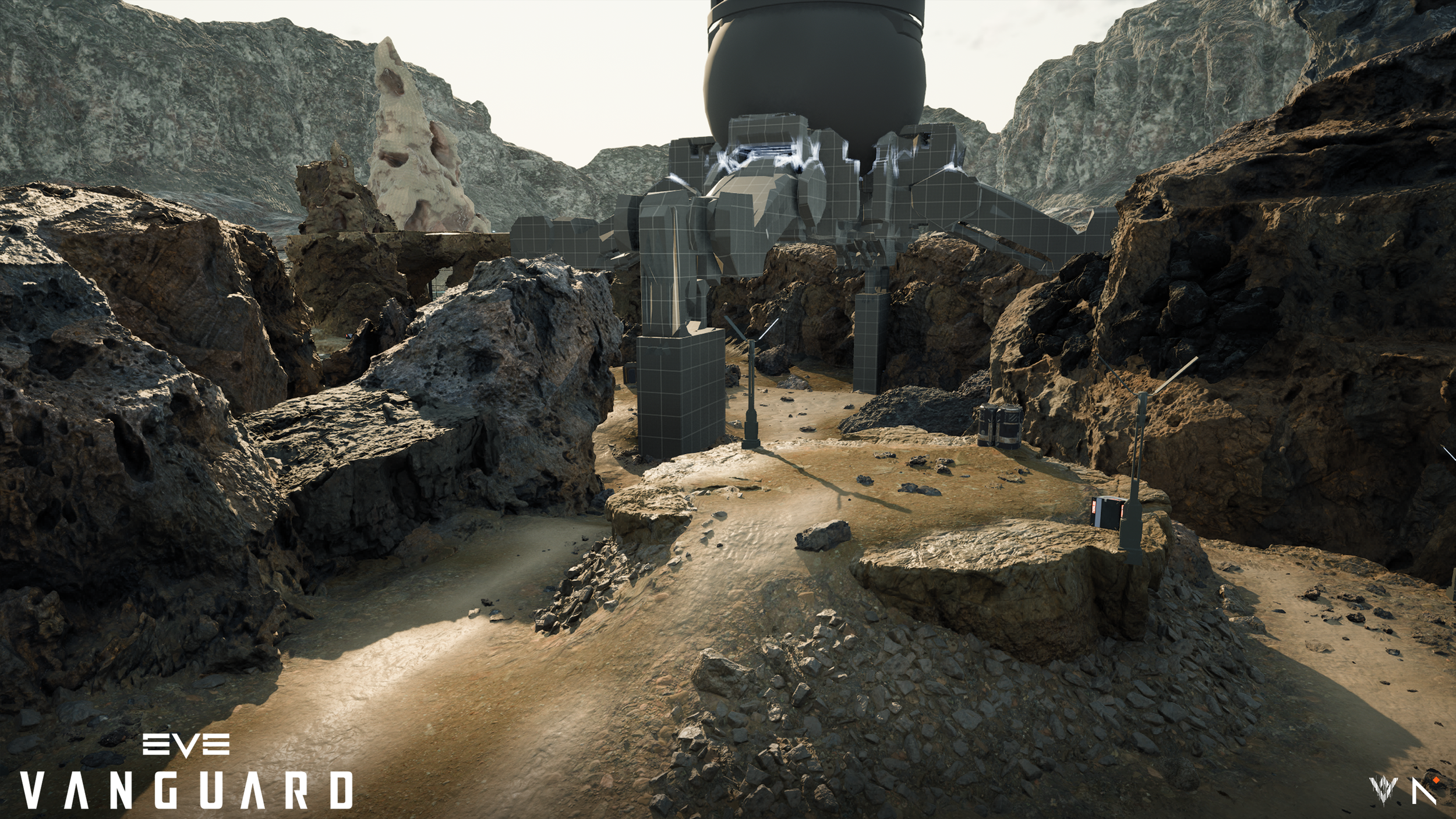
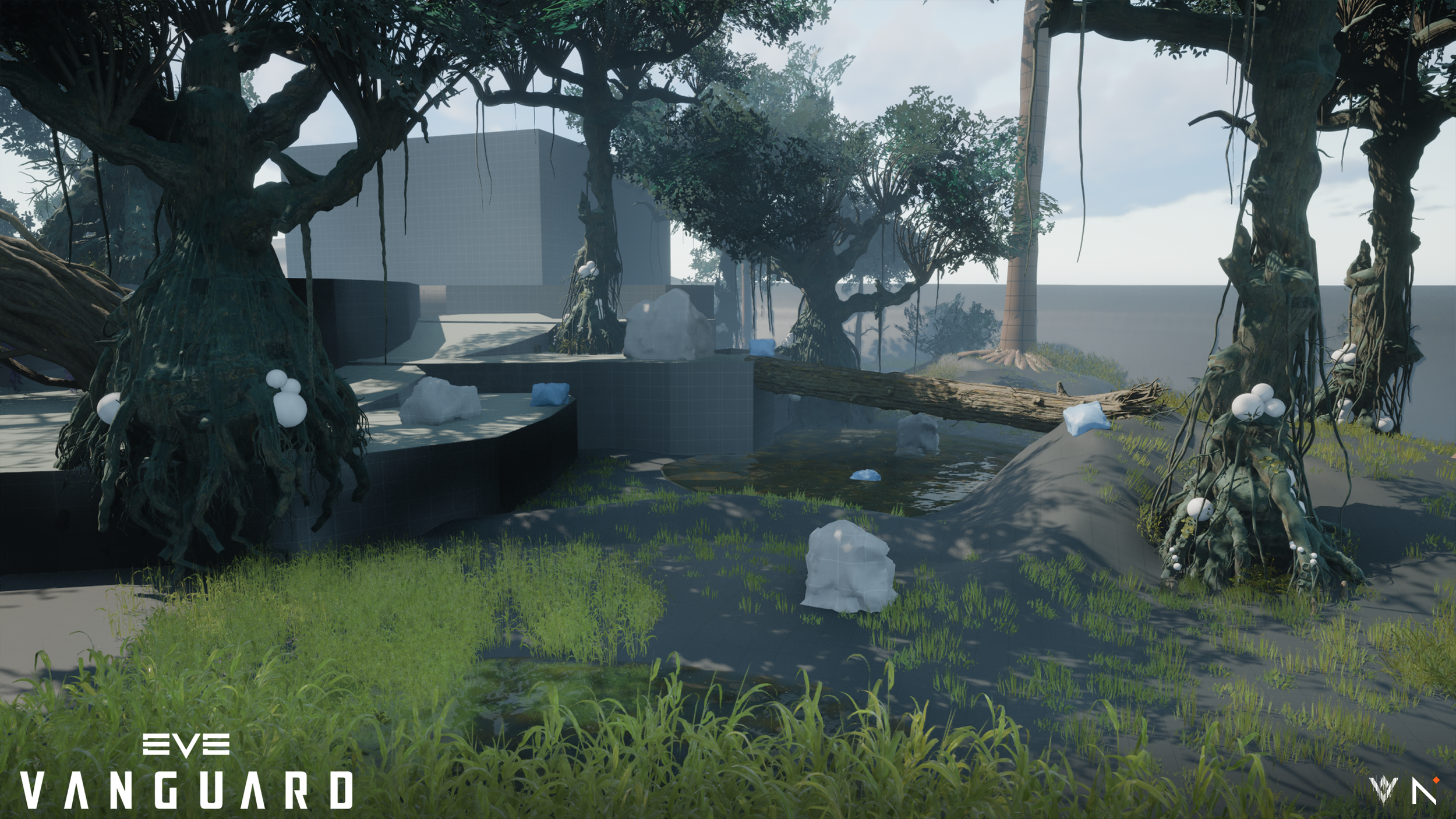
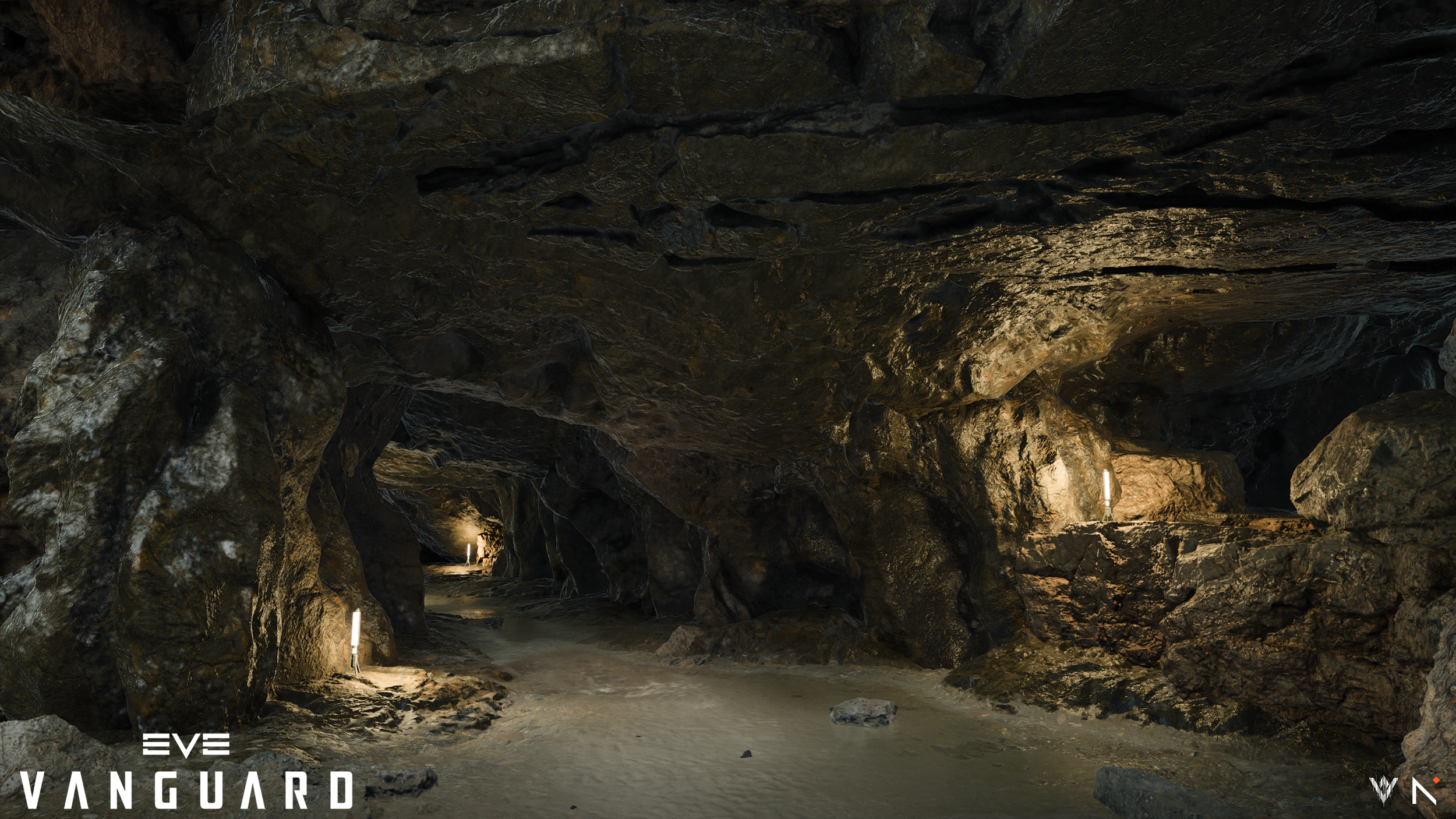
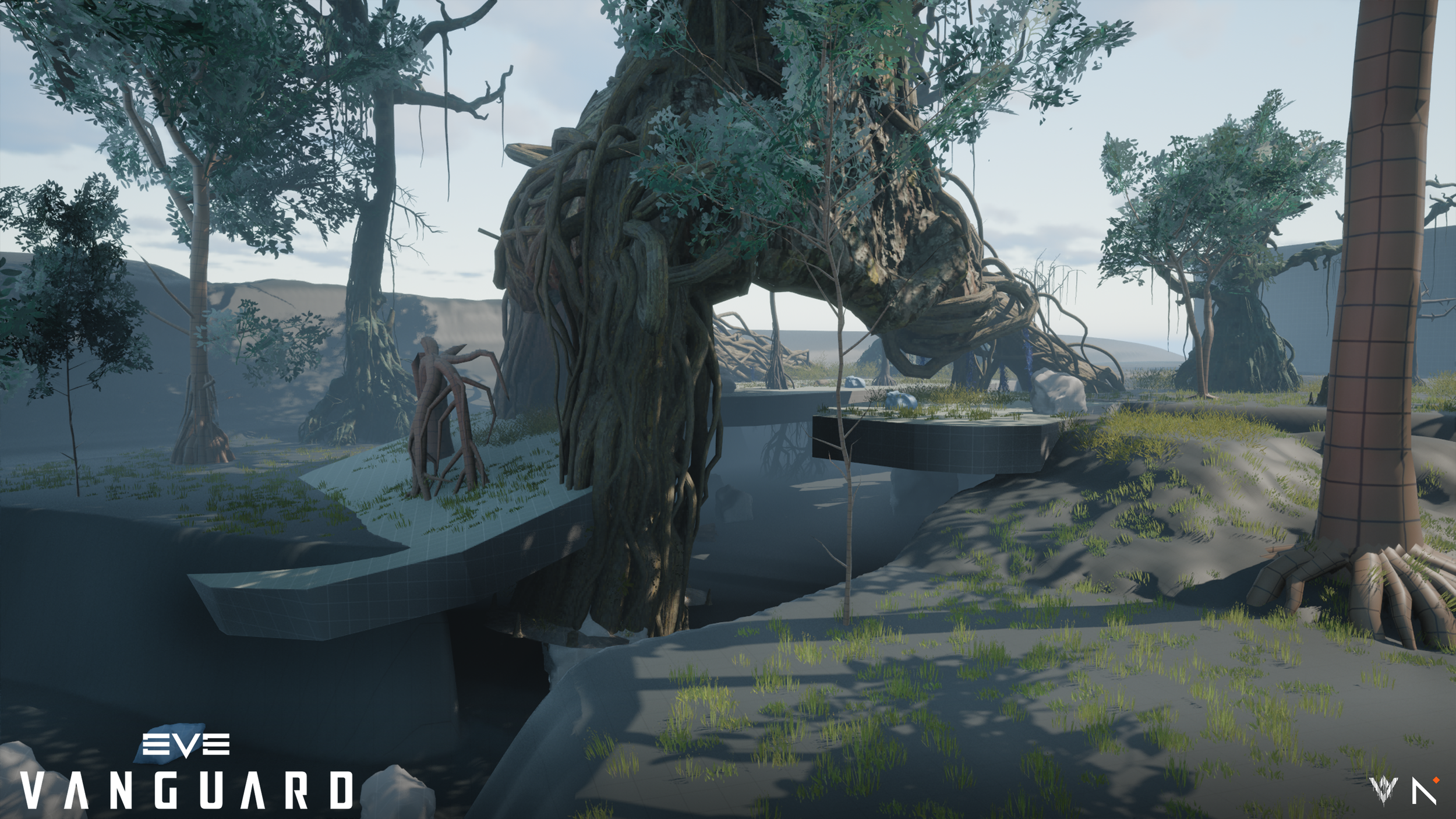
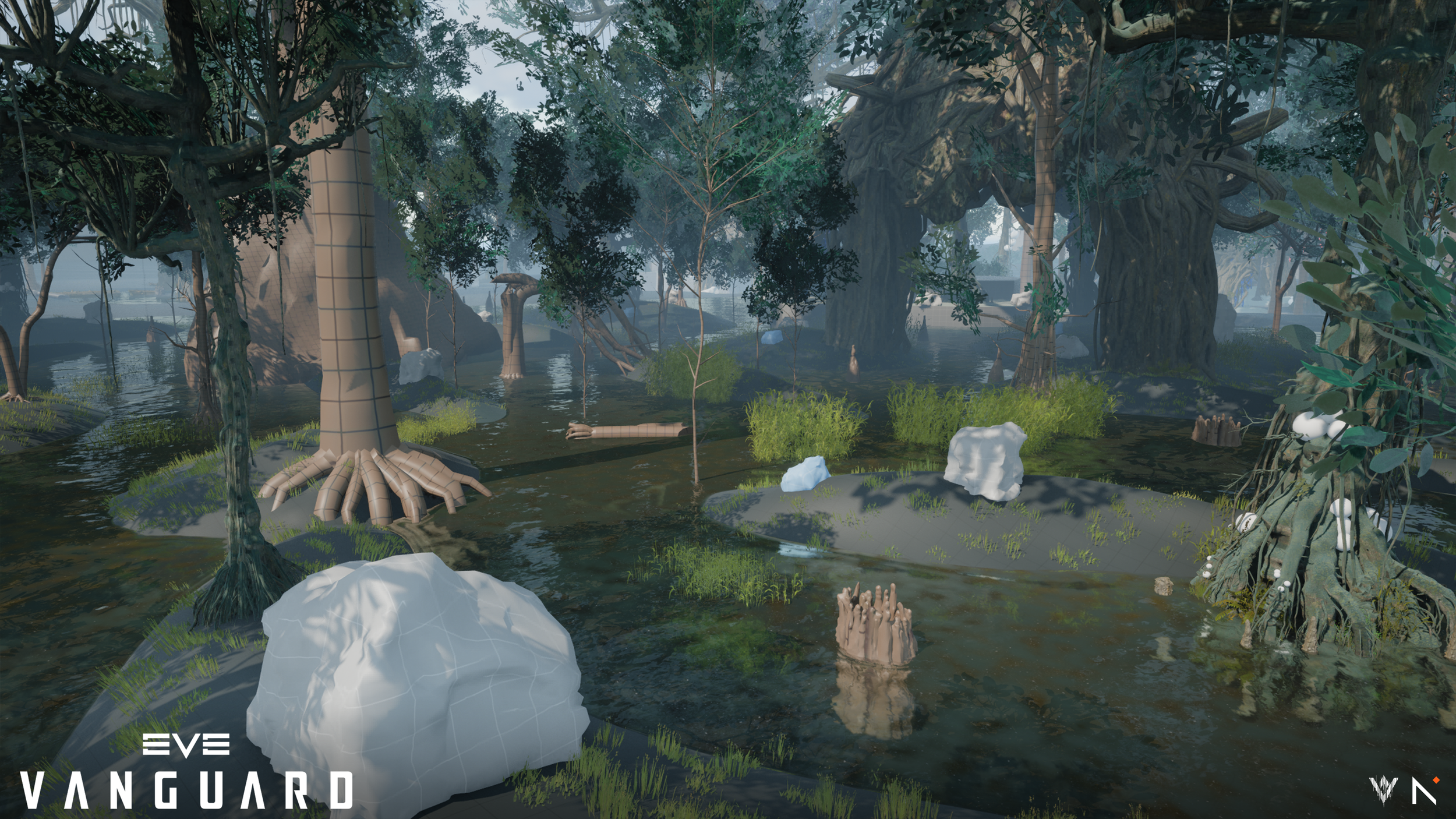
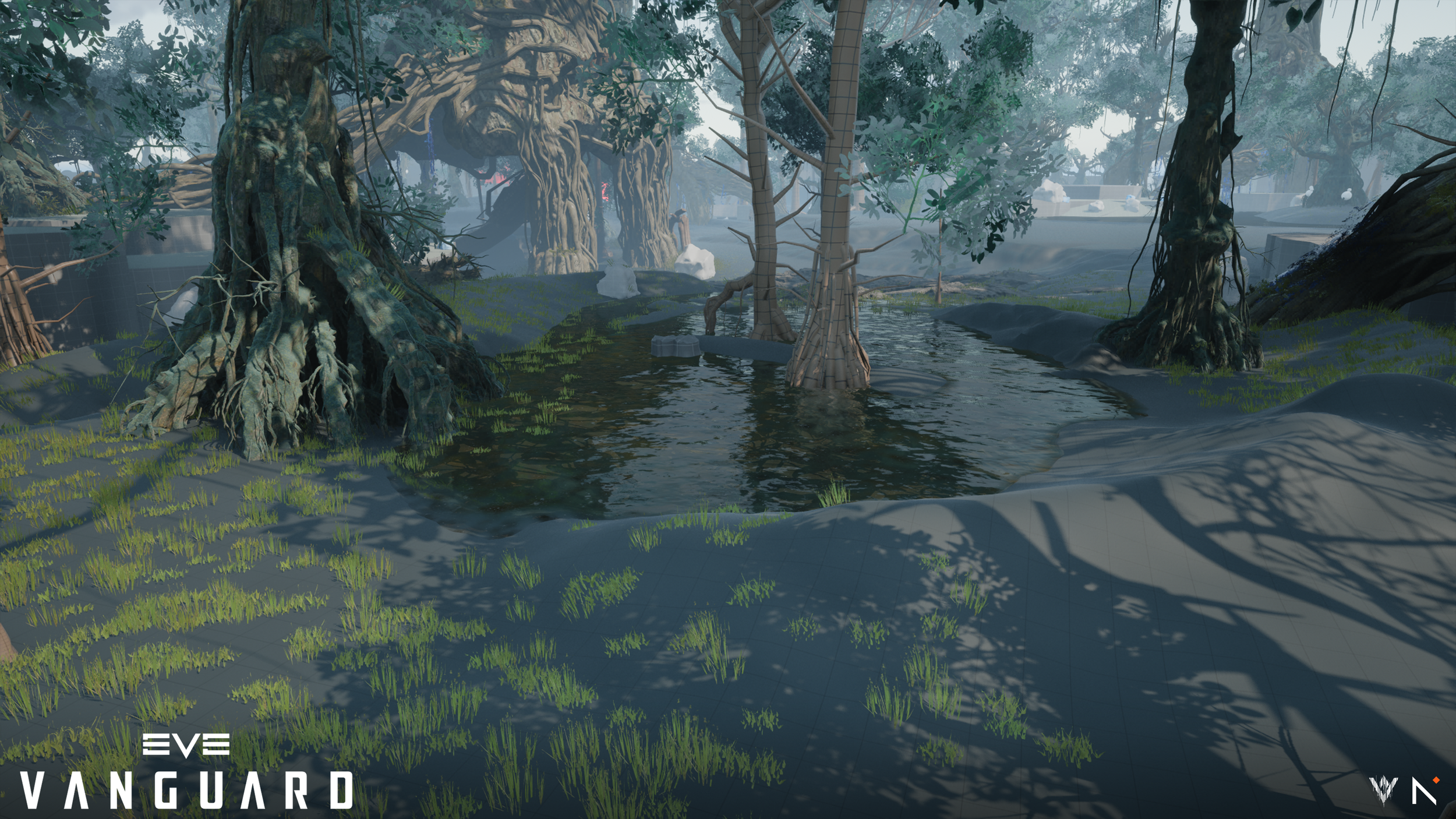
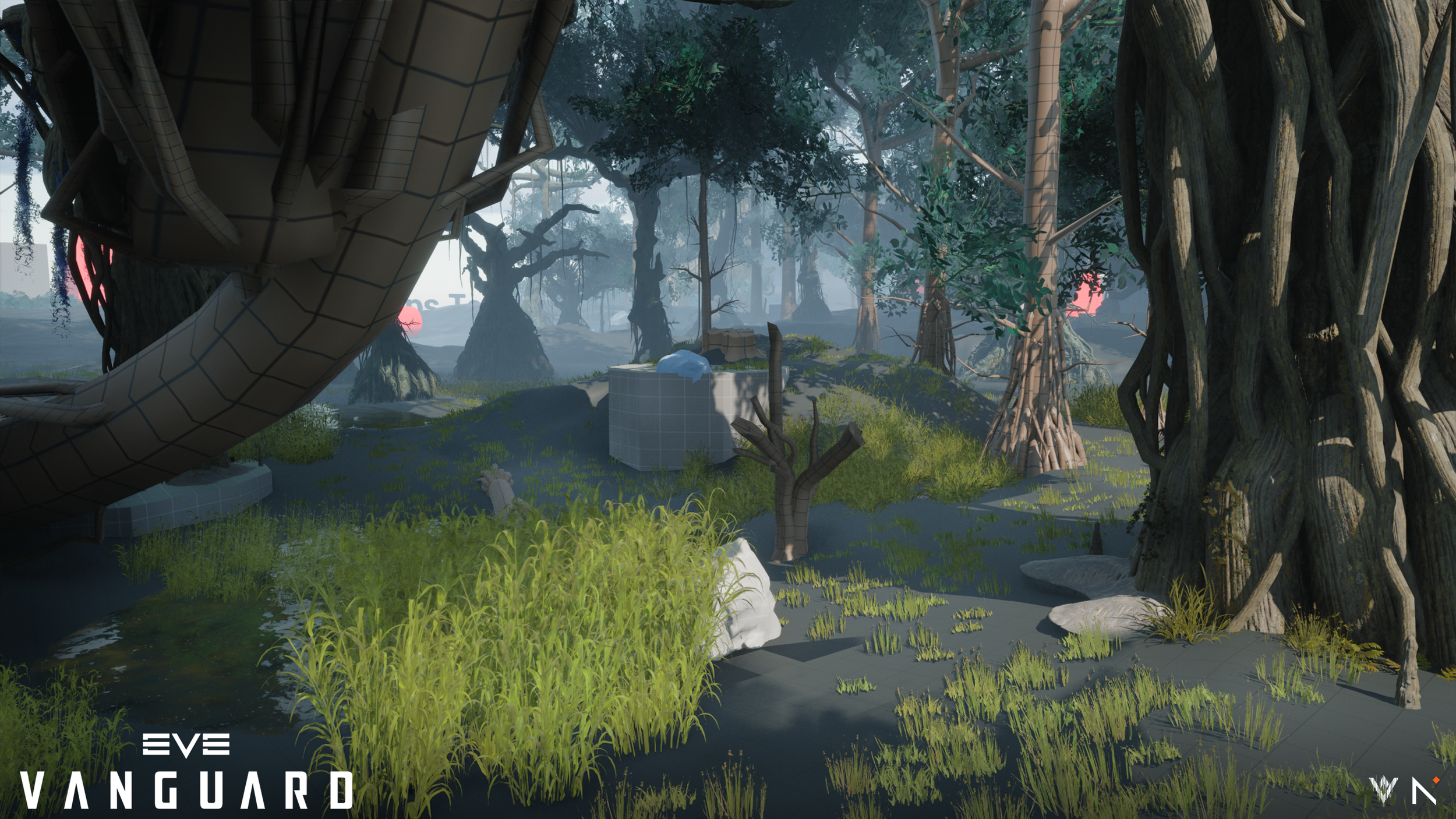
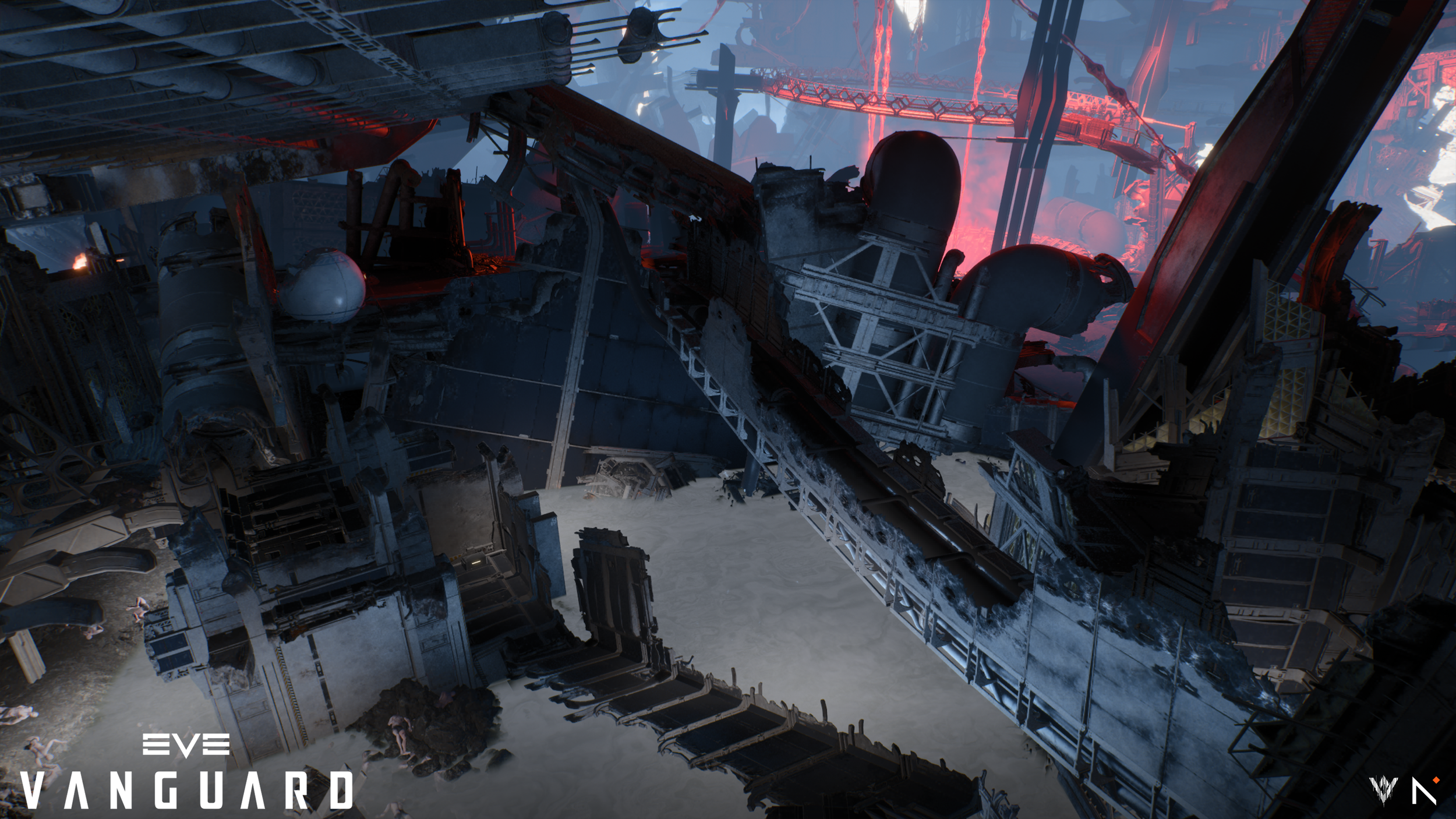
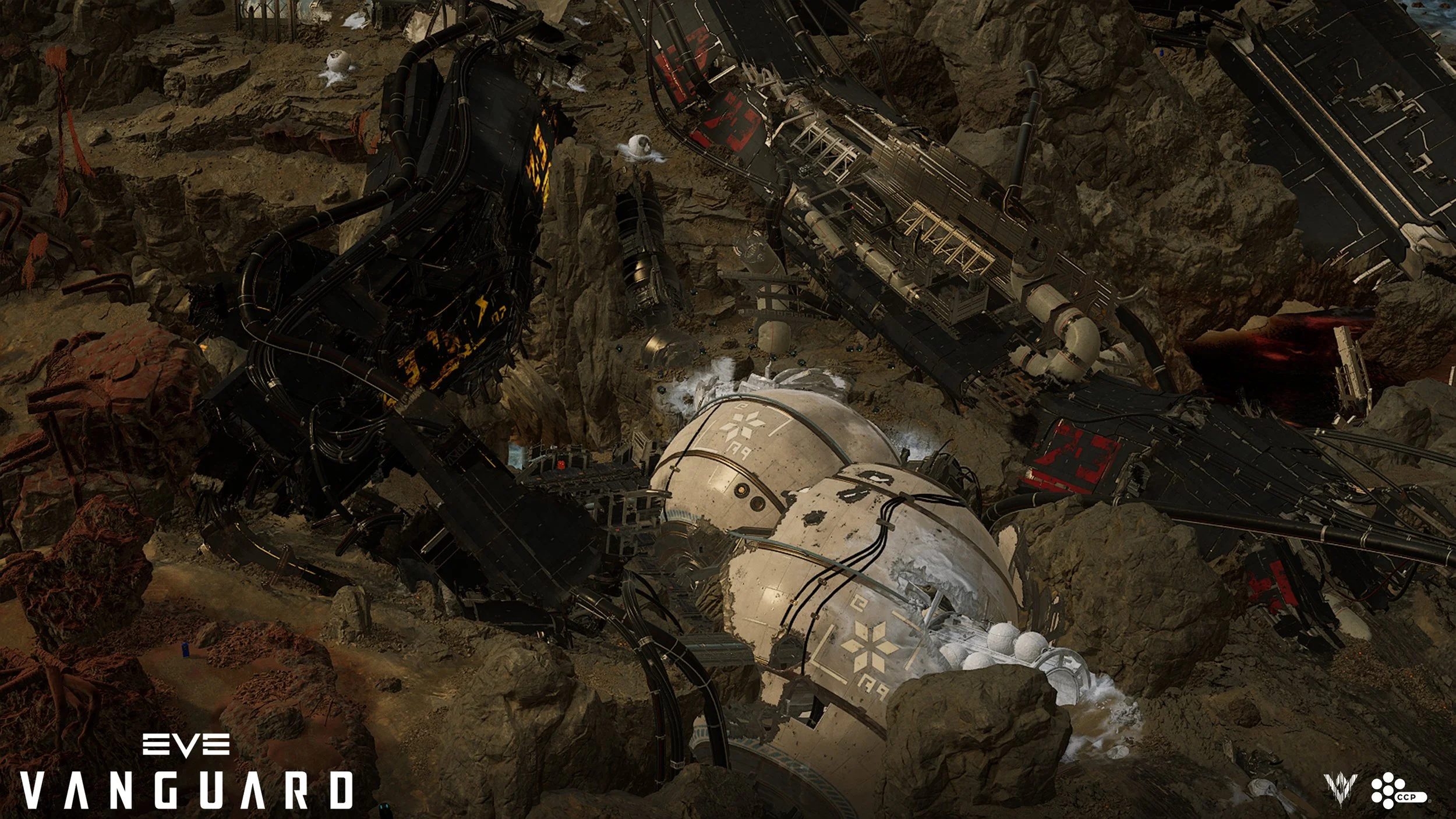
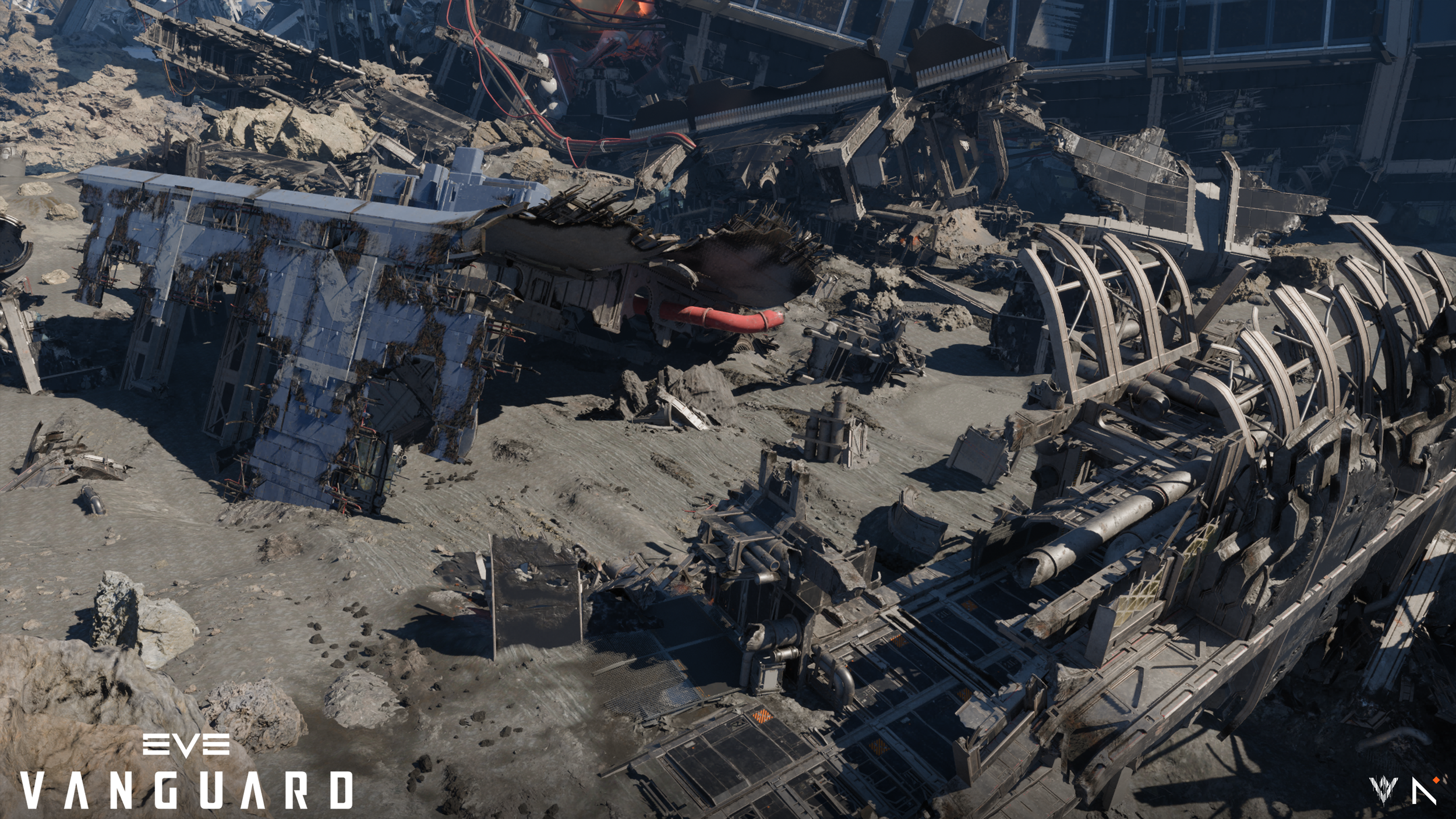
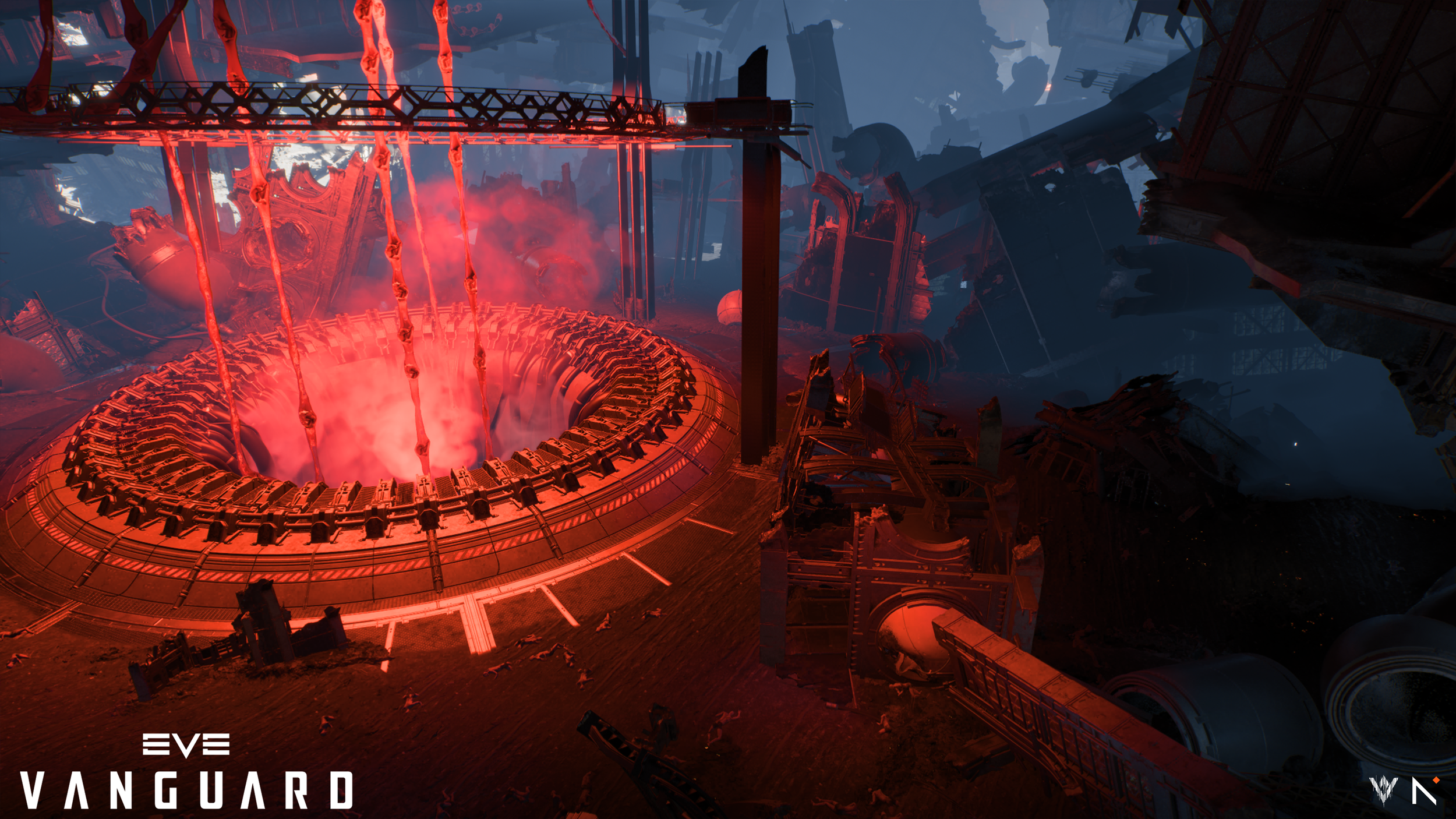
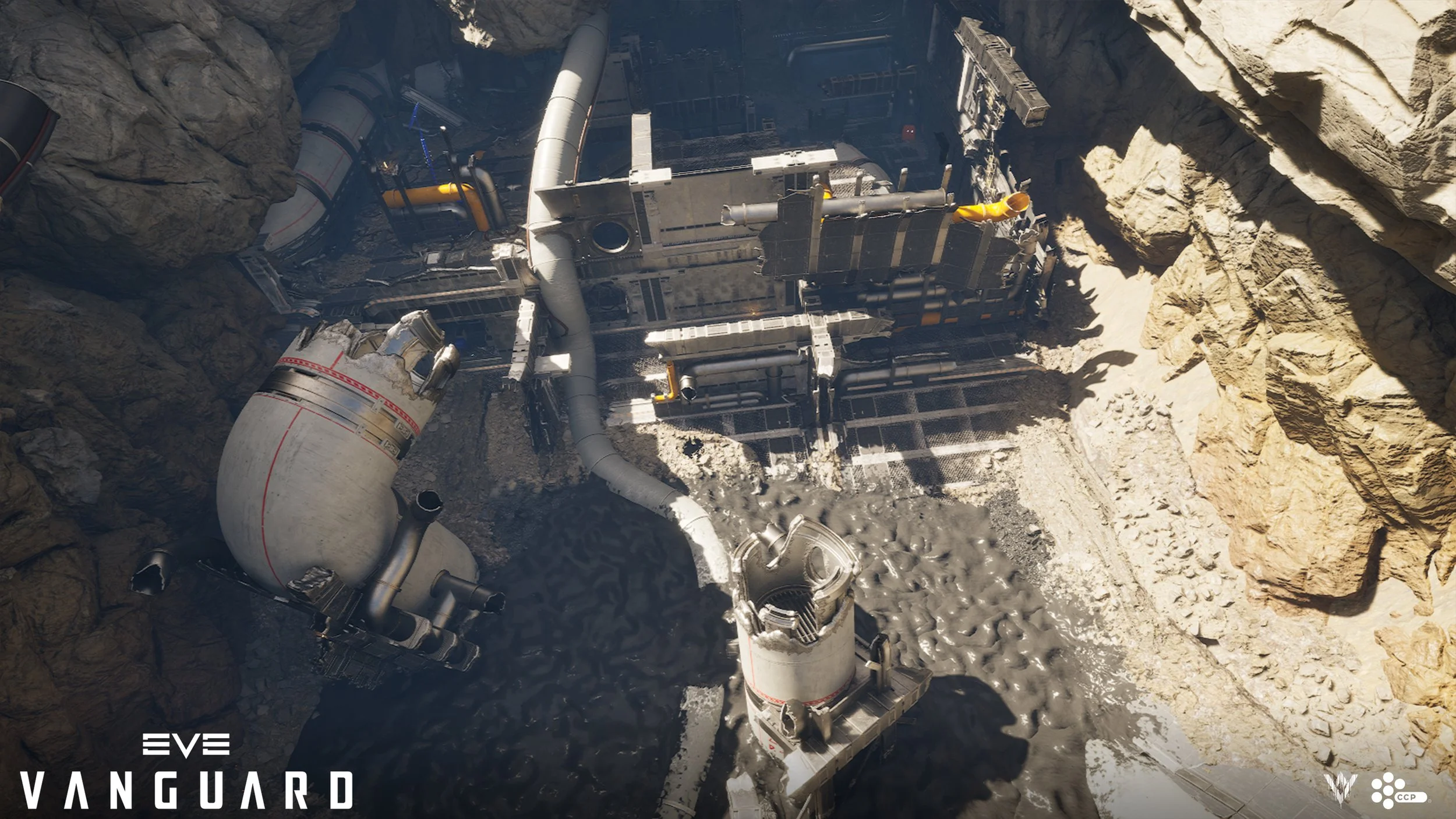
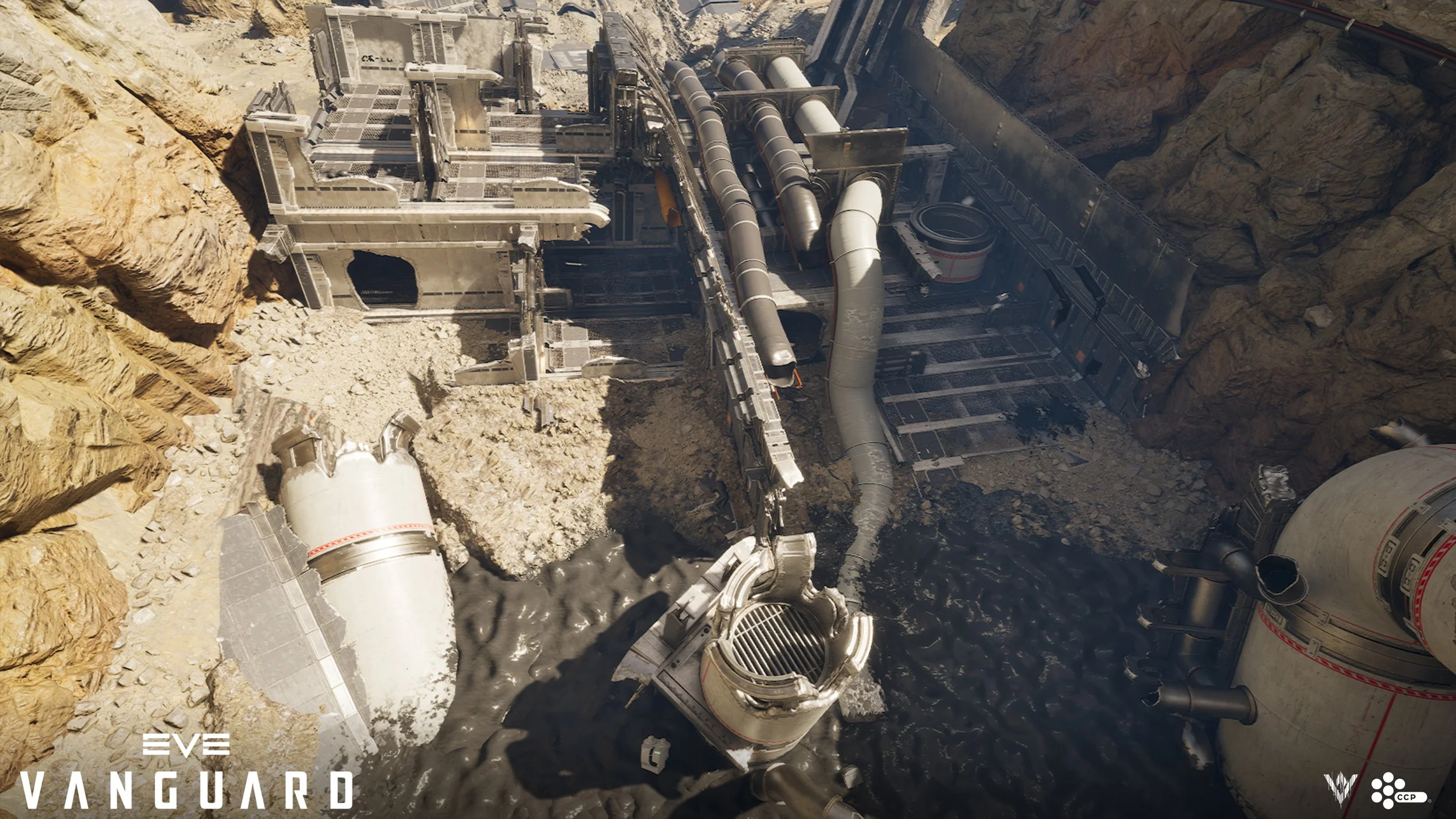
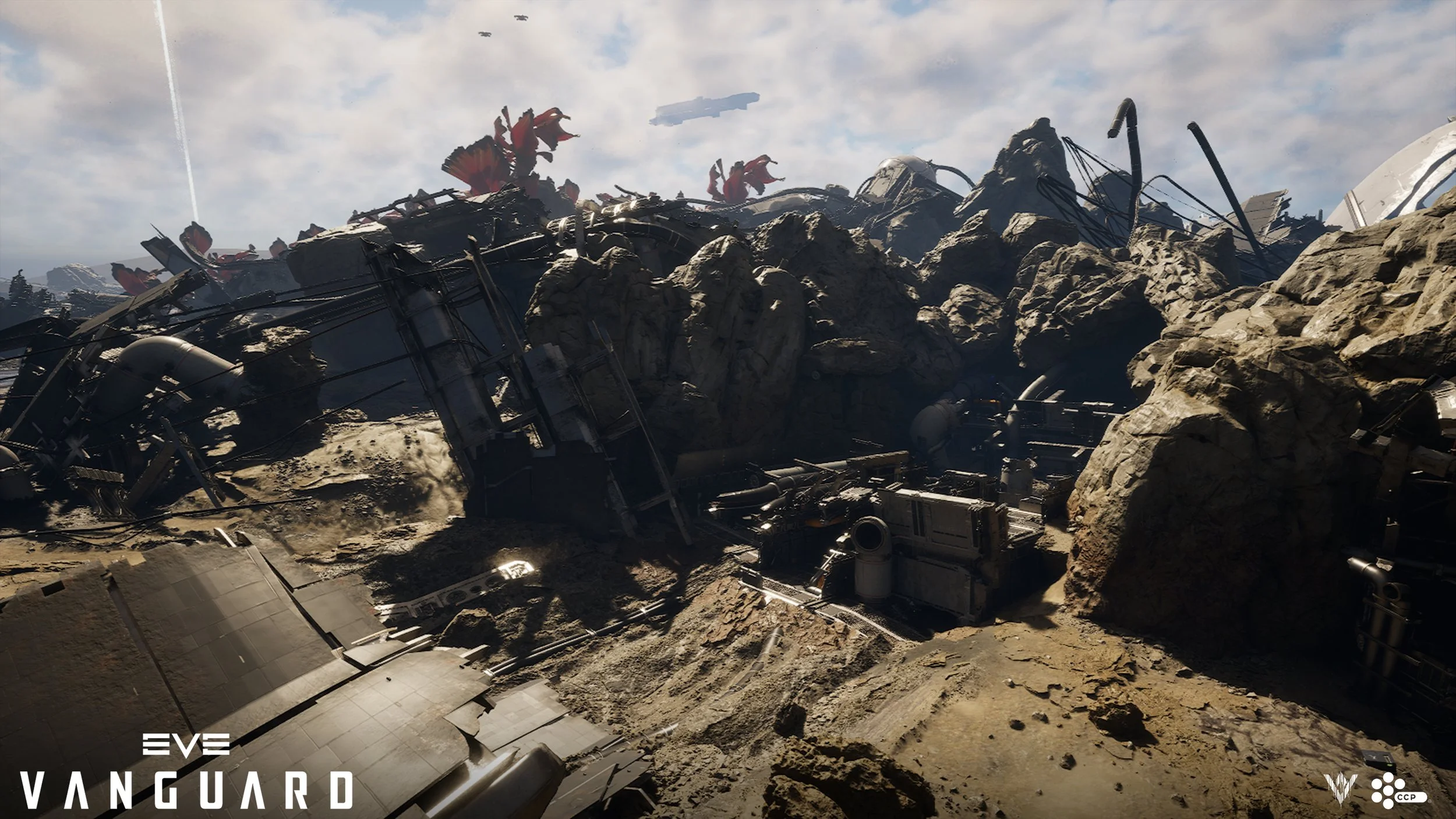
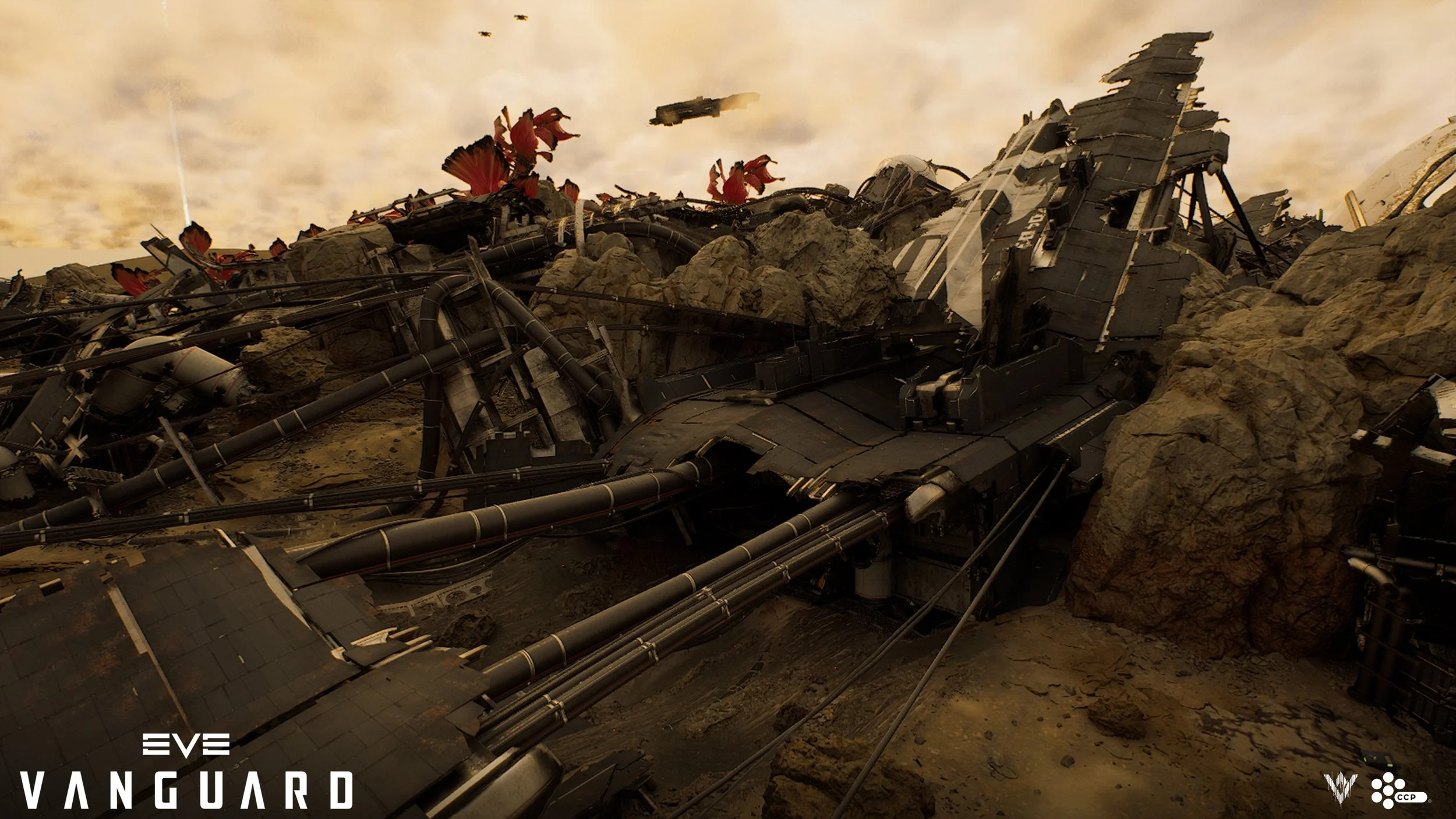
In the earlier maps, all of the POIs in Vanguard were composed of either wreckage or natural terrain. Working with wreckage posed some interesting challenges, as in order for it to feel authentic and destroyed, the structures would have to be bent, twisted, and warped to appear as if they had slammed into the ground at high speed. It was an interesting challenge to create spaces that both felt like wreckage but didn’t break gameplay metrics.
My solution was to start by creating the spaces undamaged, with straight lines and easy to manipulate layouts. Then, as the spacing and sizes were beginning to work how I needed them to, I would start bending and breaking them while adhering to level design metrics, ensuring that the POIs would both meet visual targets while also still providing a smooth gameplay experience for the player.
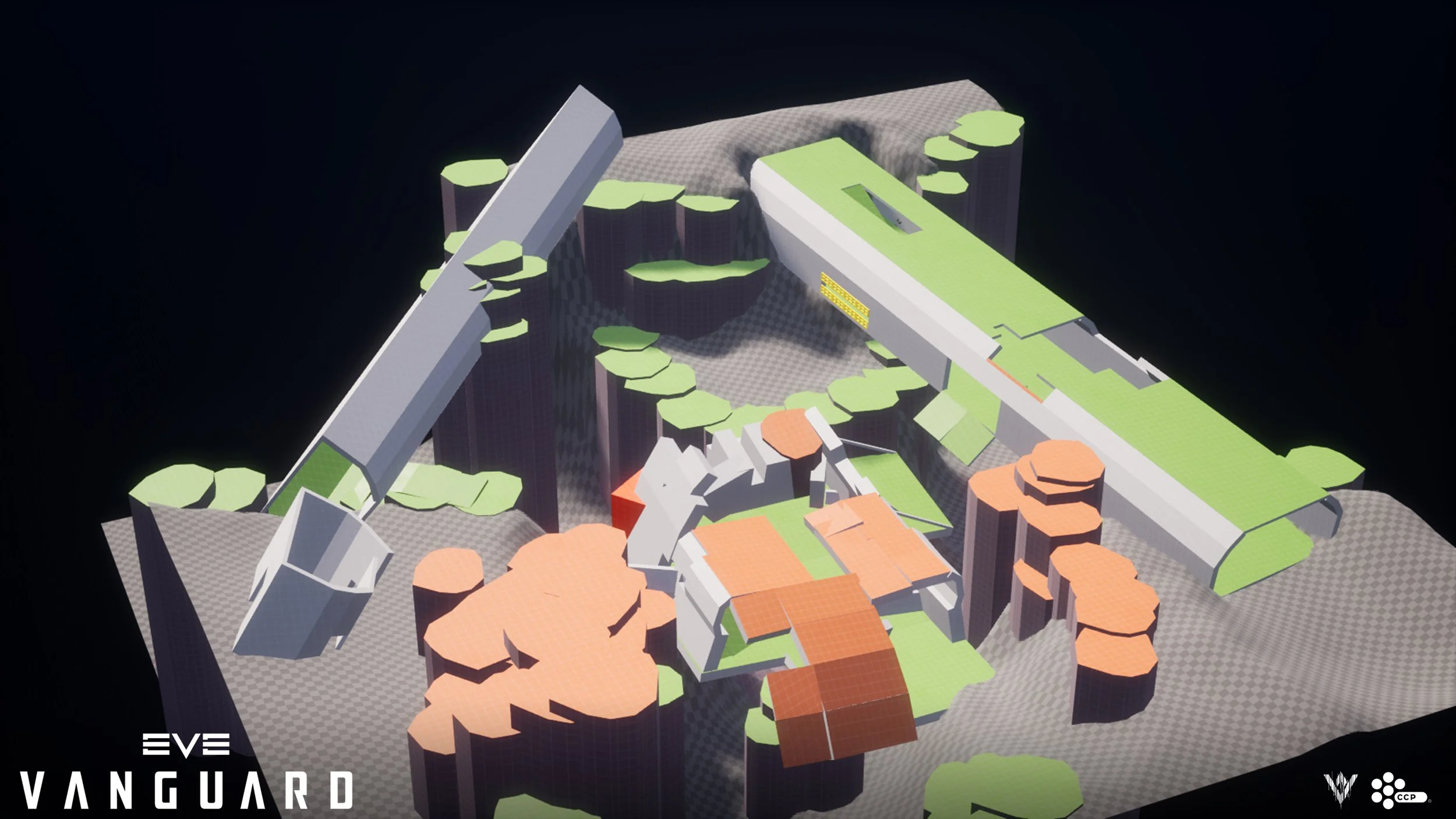
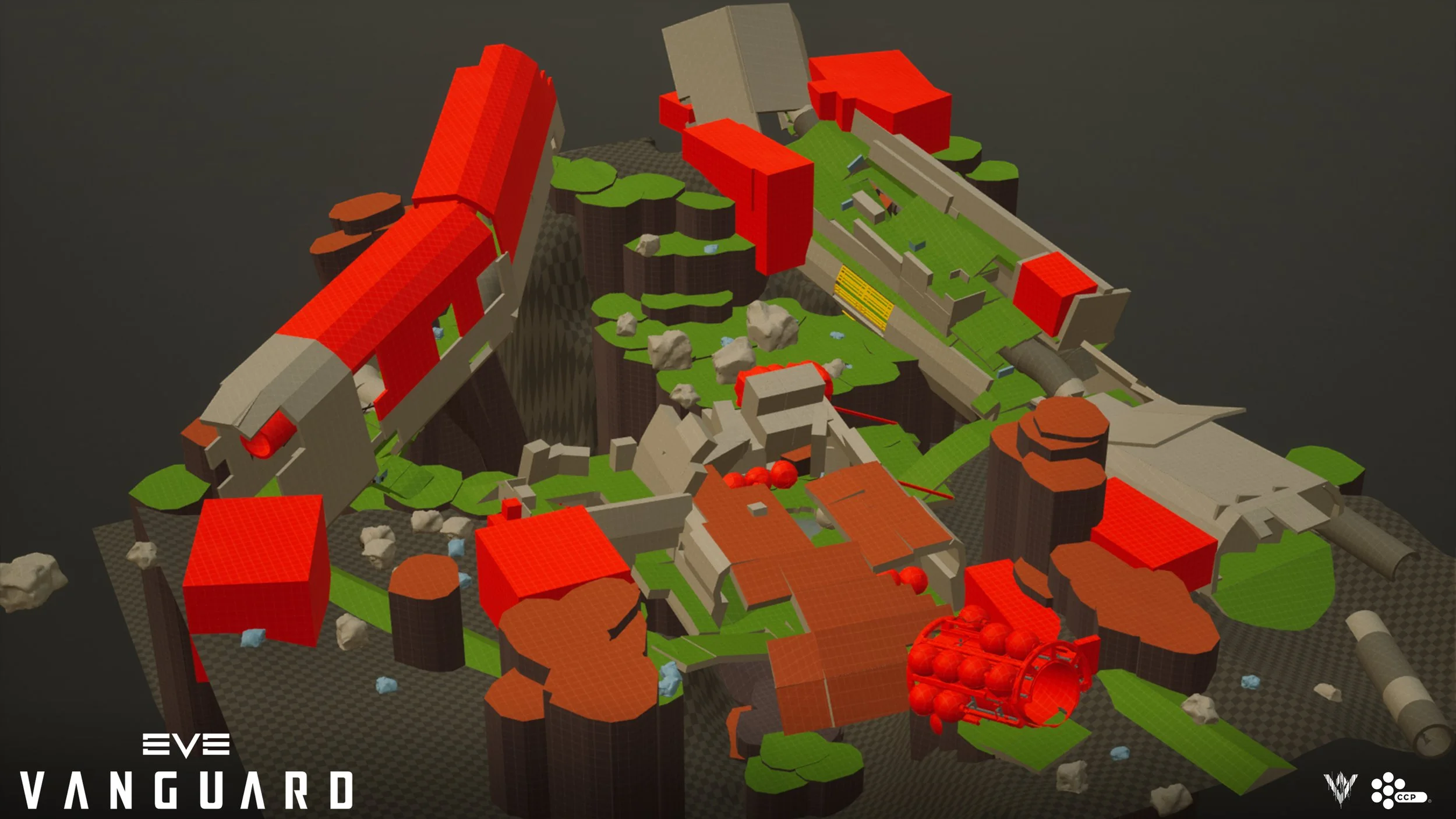
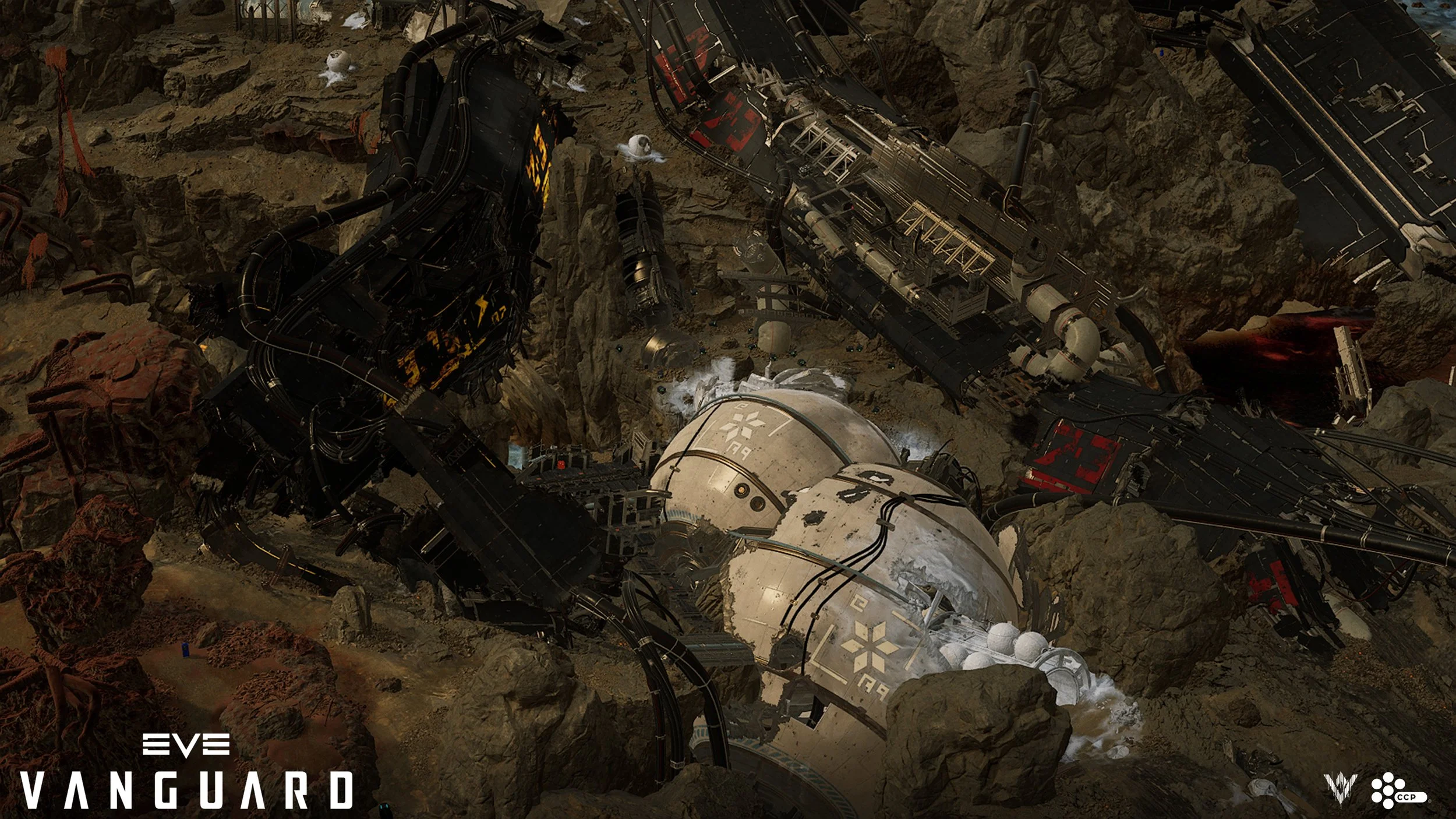
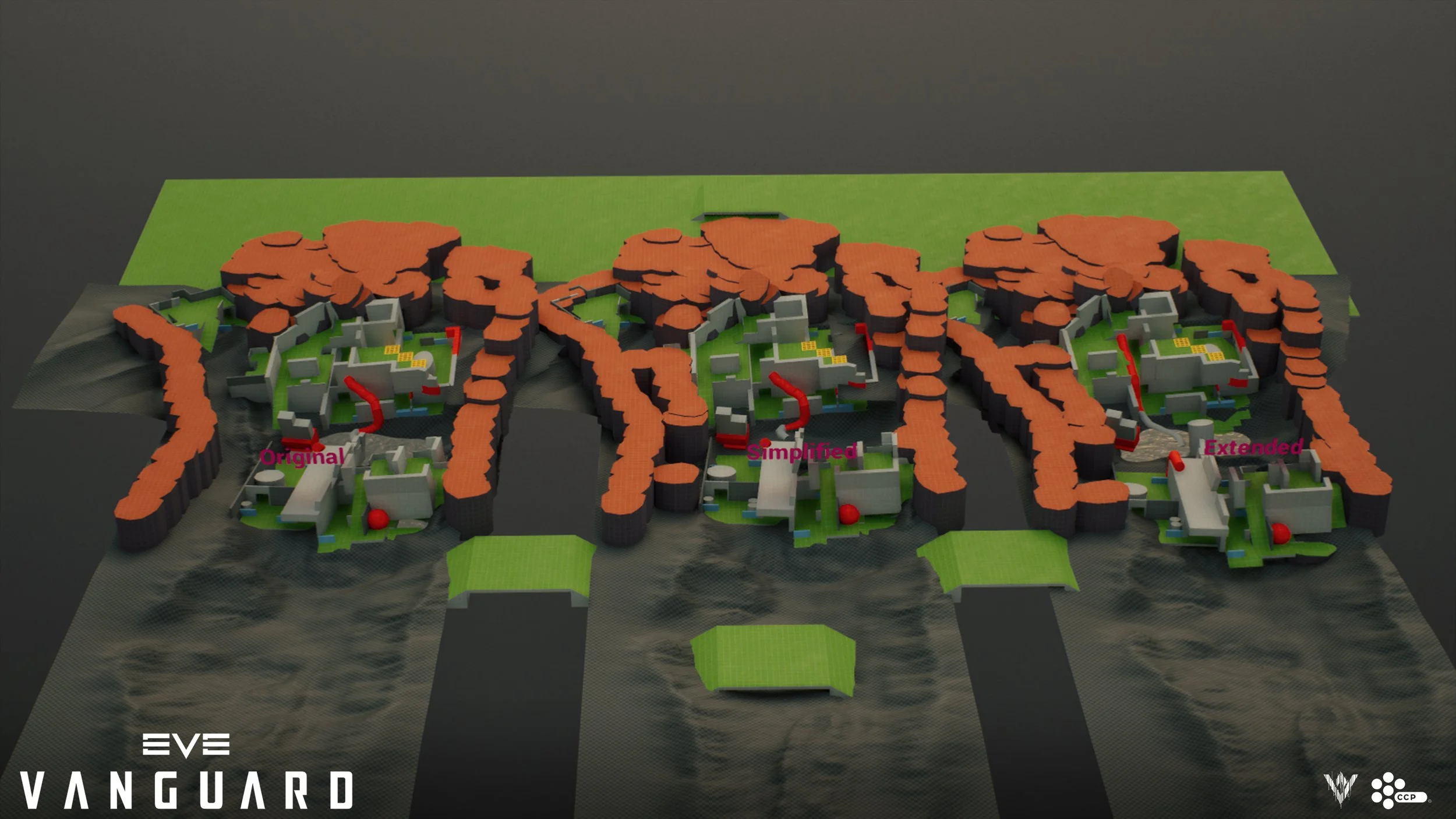
As I developed the level and POIs, I would run weekly playtests to gather feedback and iterate on my blockouts. These playtests and iterations were vital to improving quality across the gameplay experience.
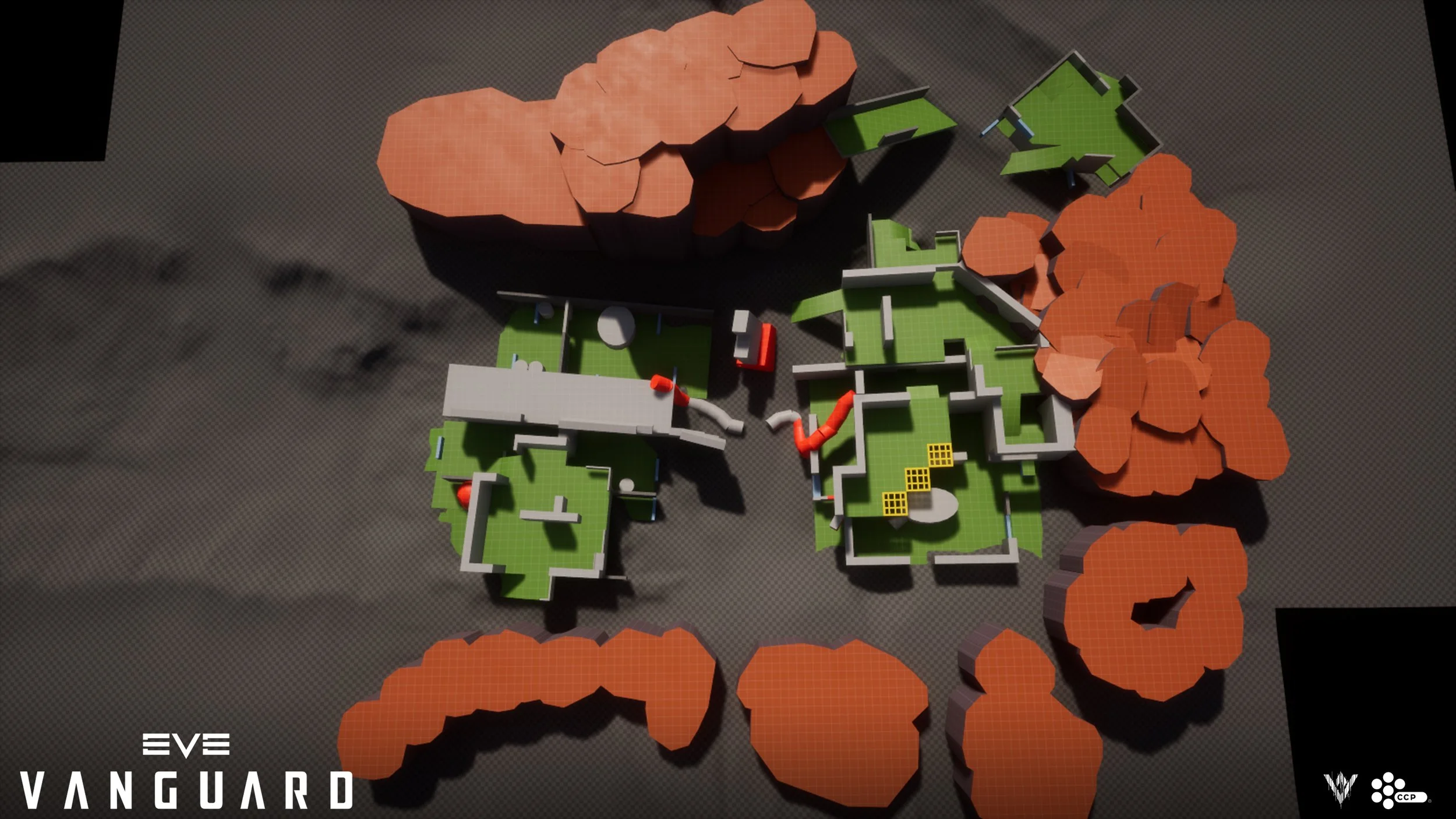
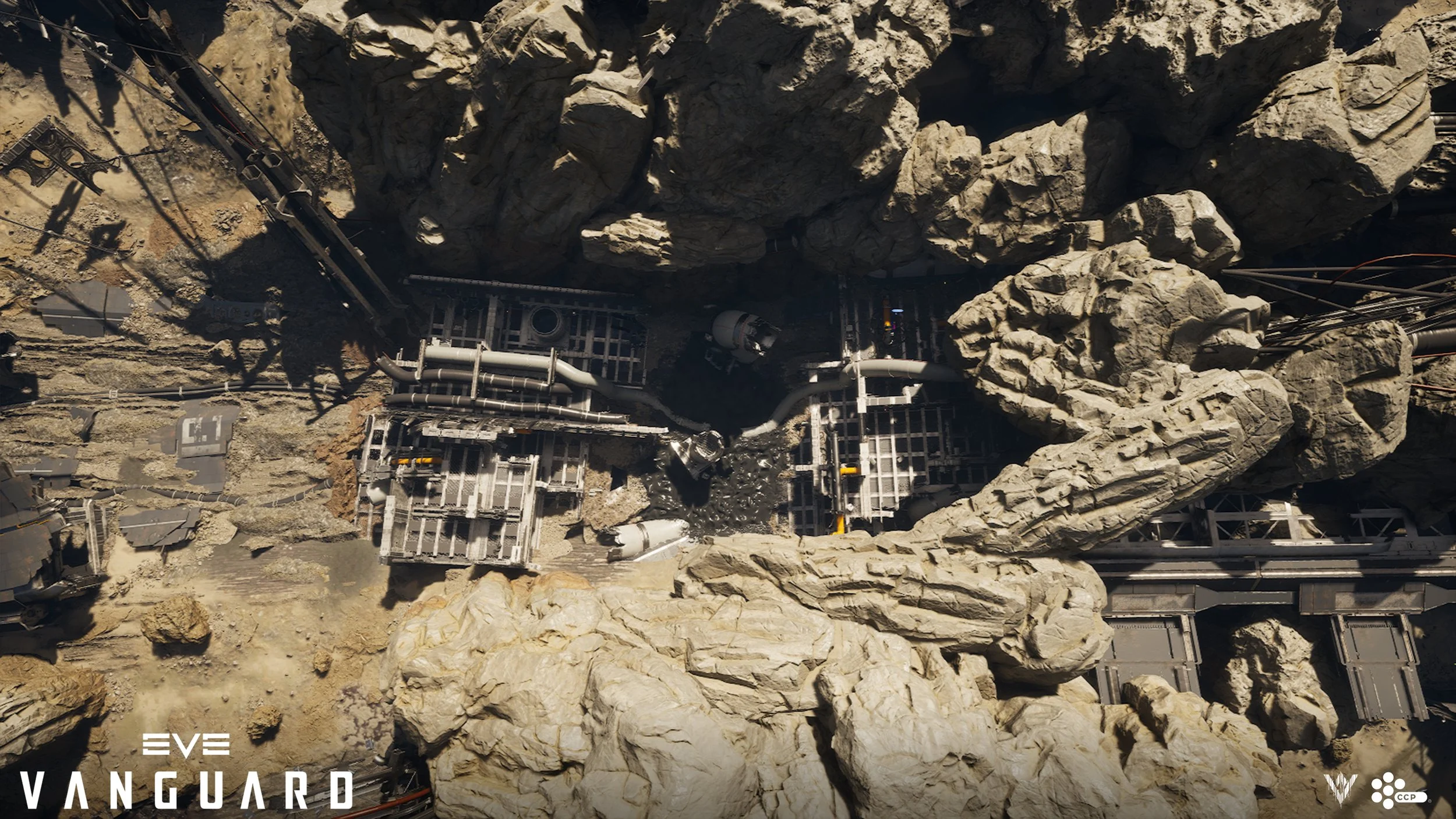
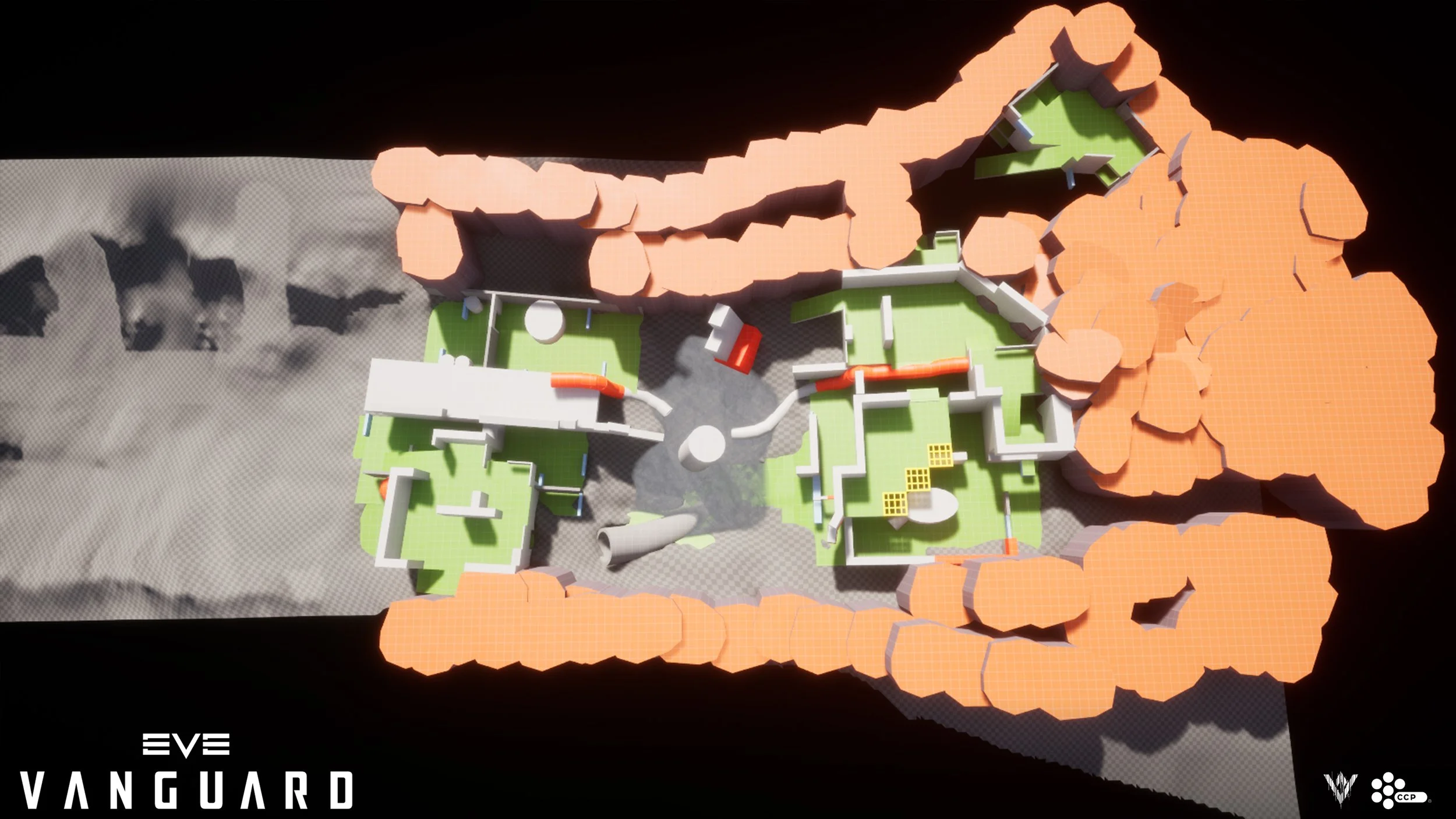
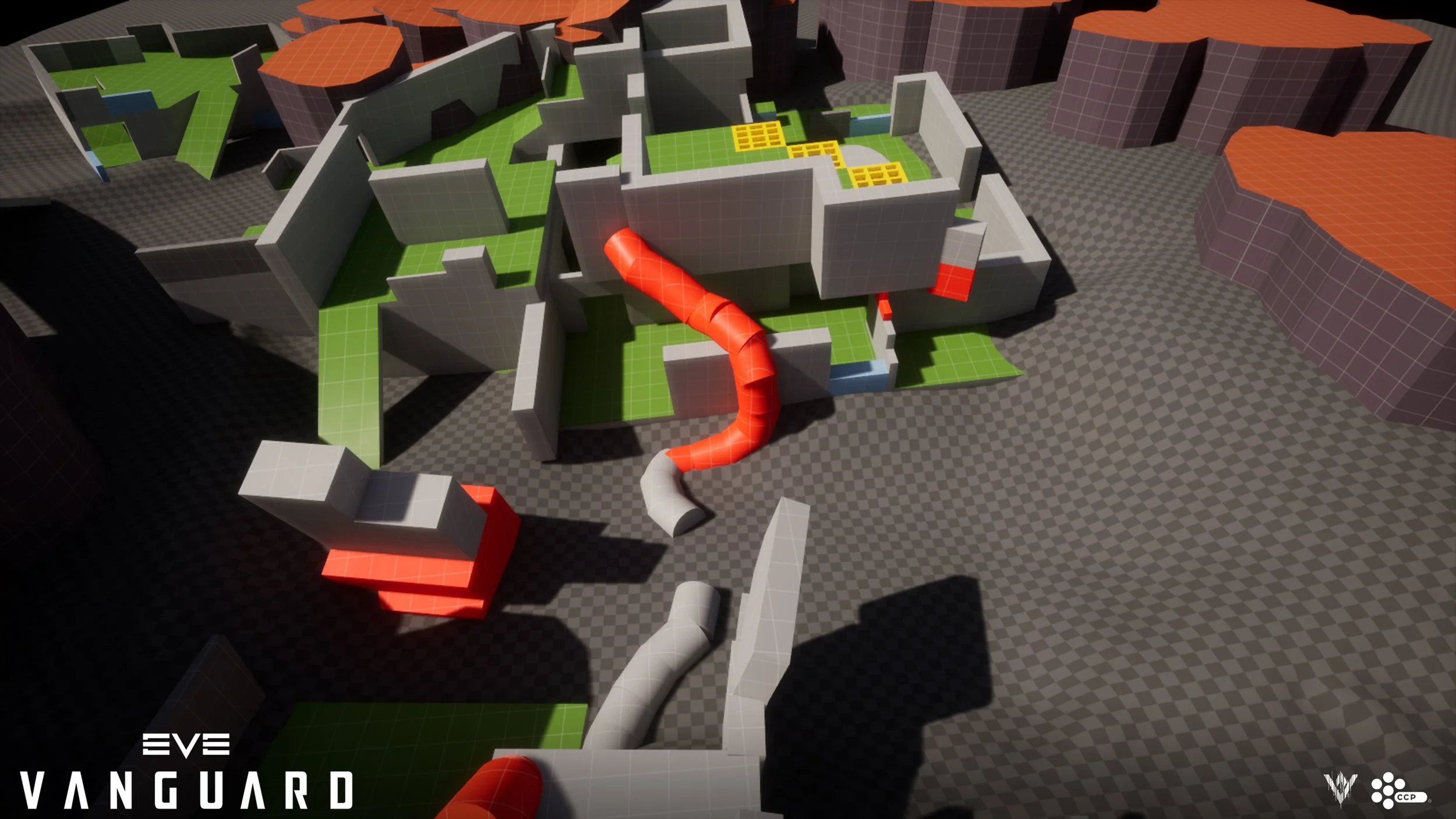
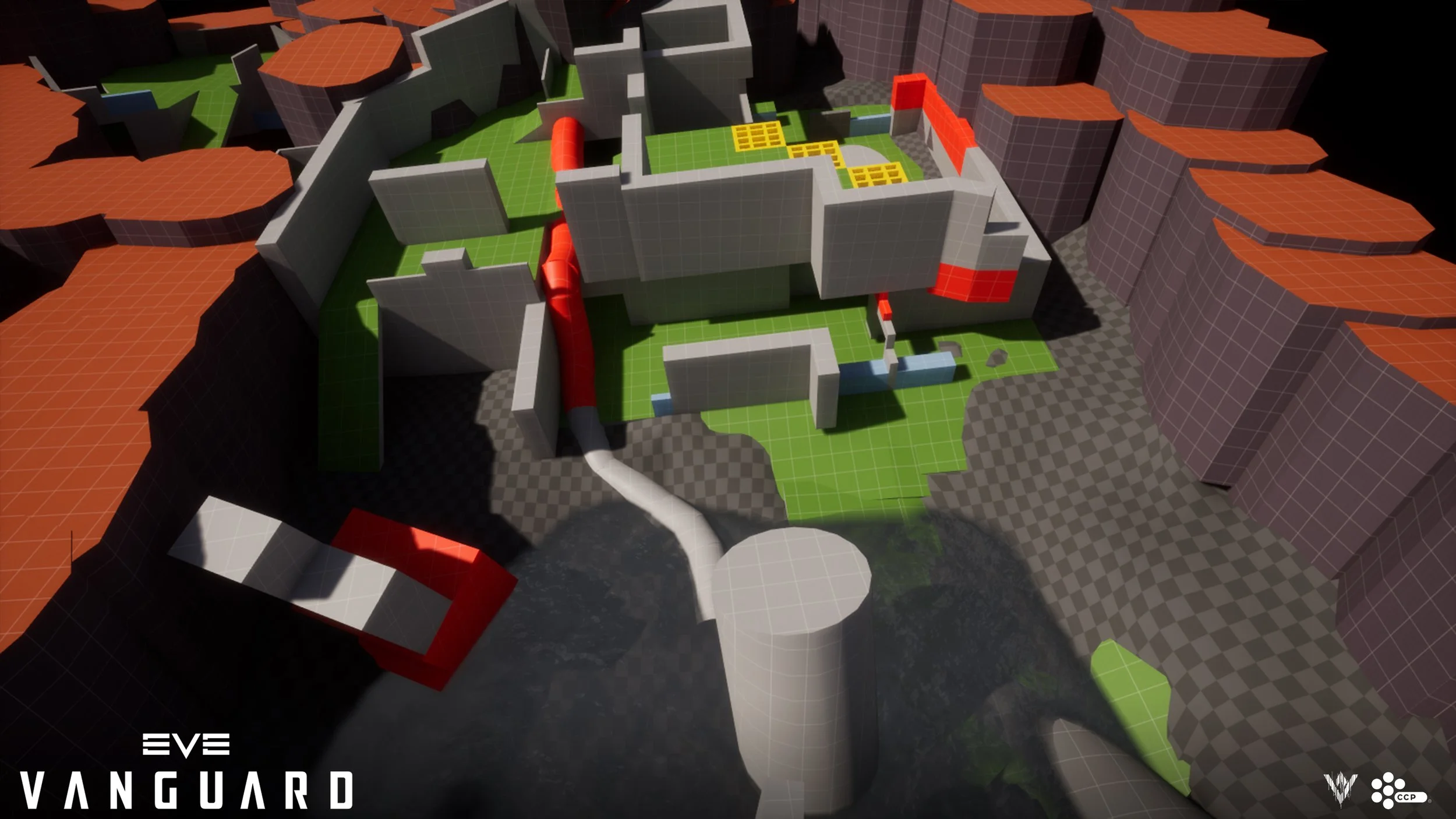
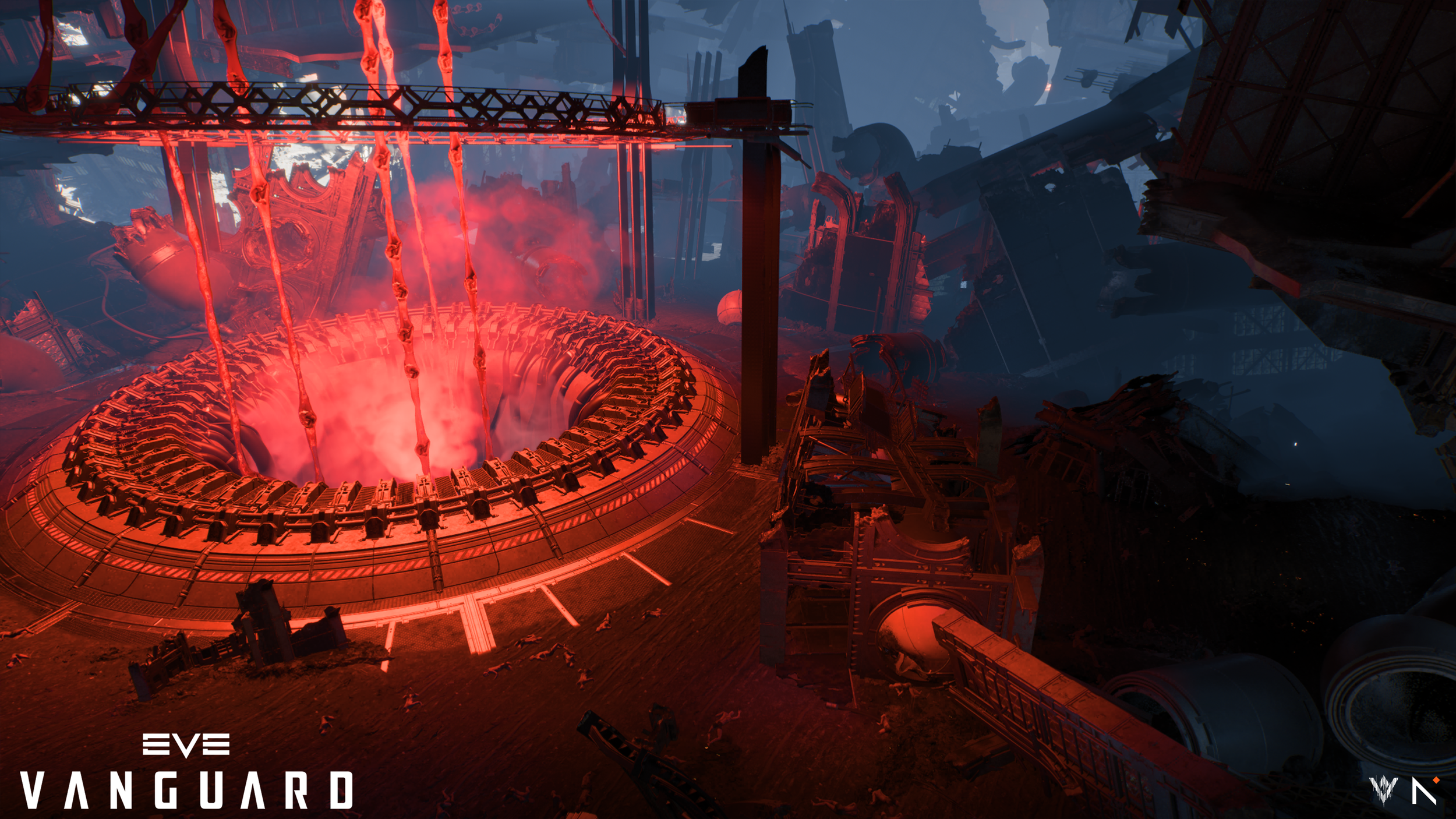
As the flow of the level started to become more finalized through blockout and iteration, my next step was start designing AI encounters for the level. I would start by looking at spaces in the level and deciding what type of encounter would best suit it. Next I would add in the AI actors and add in additional blockout to help guide how players were meant to interact with these AI and firmly cement the archetype of the encounter. This was all done while allowing for multiple playstyles and the knowledge that players could be approaching the encounter from any direction.
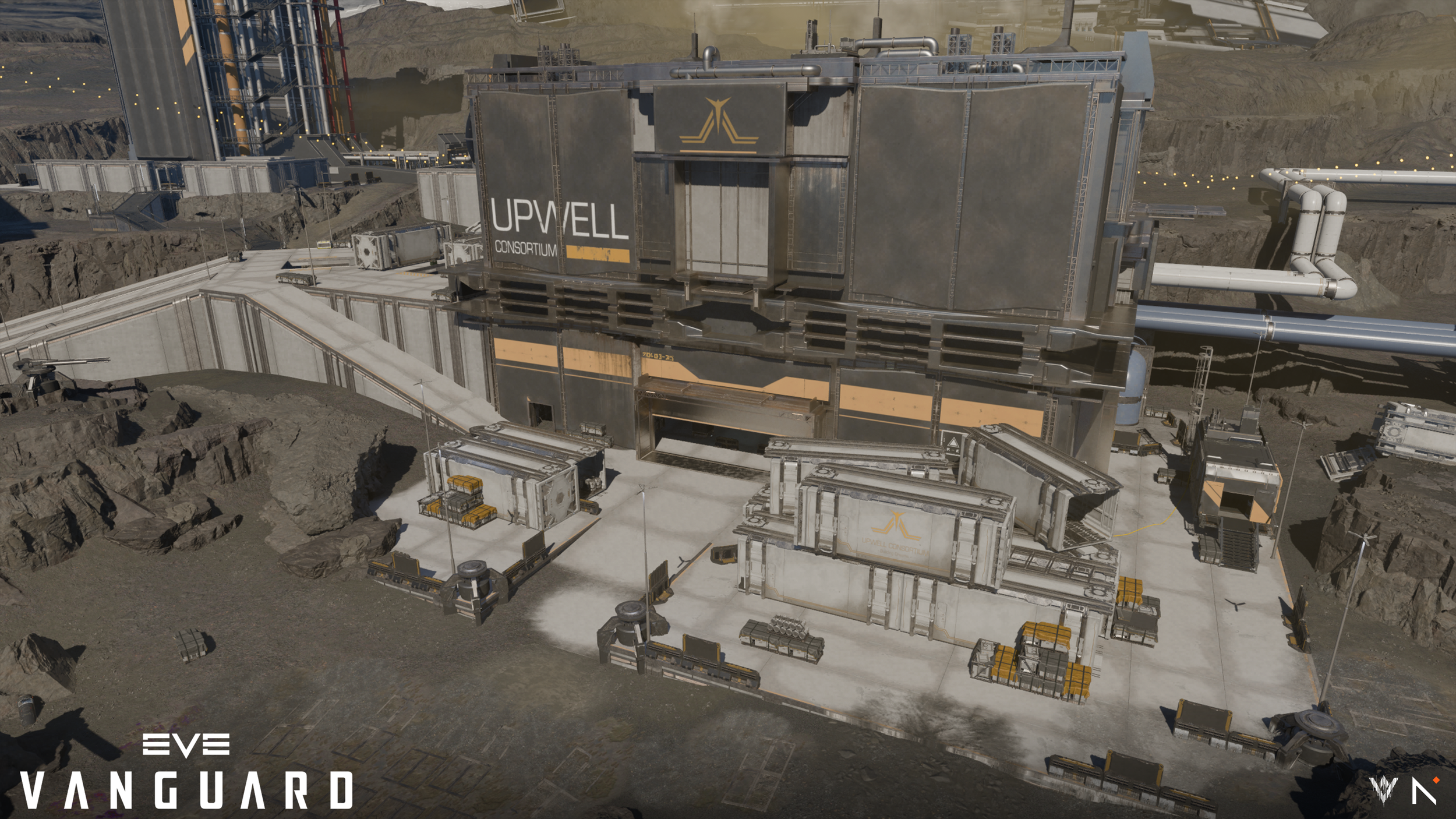
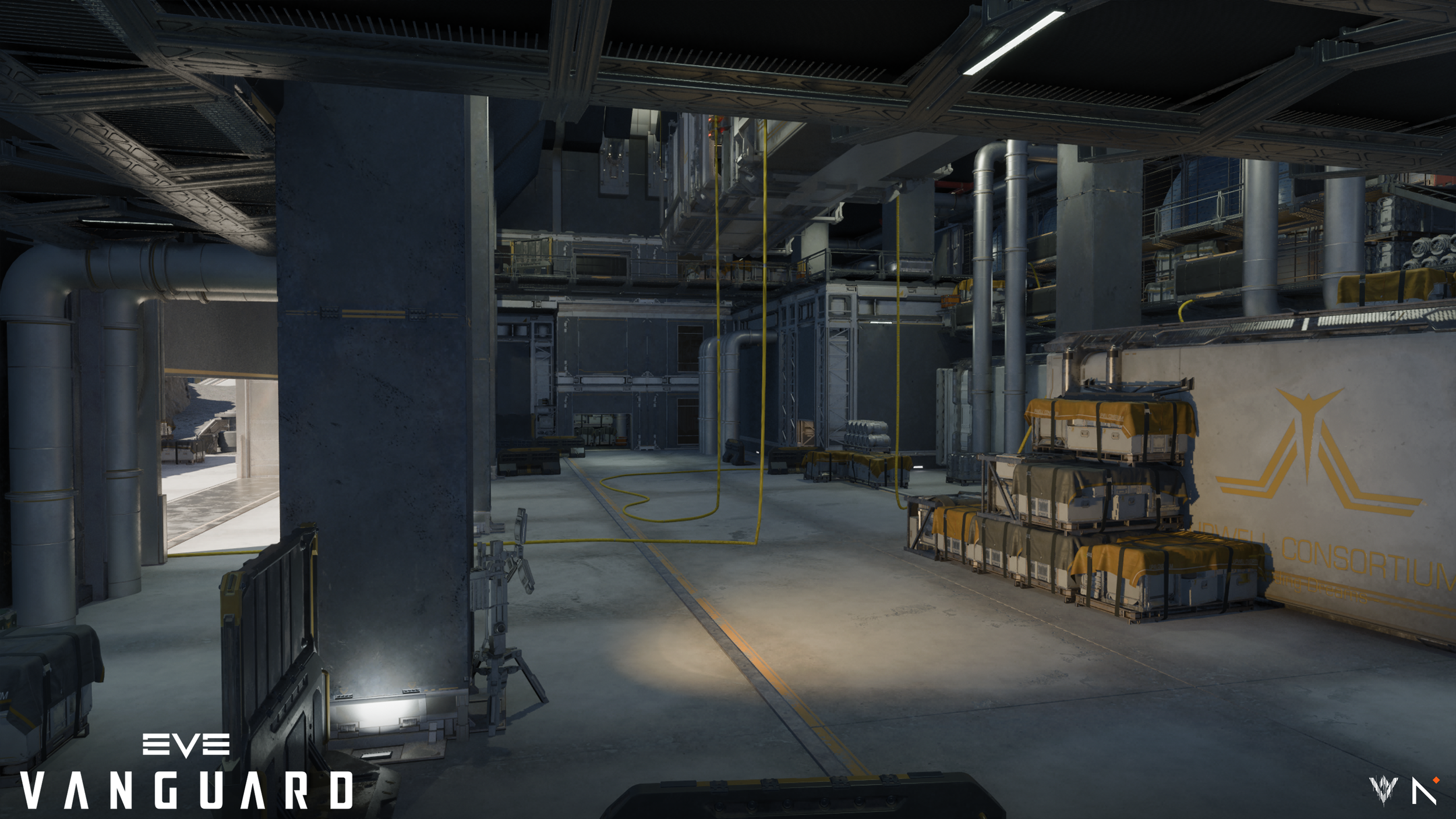
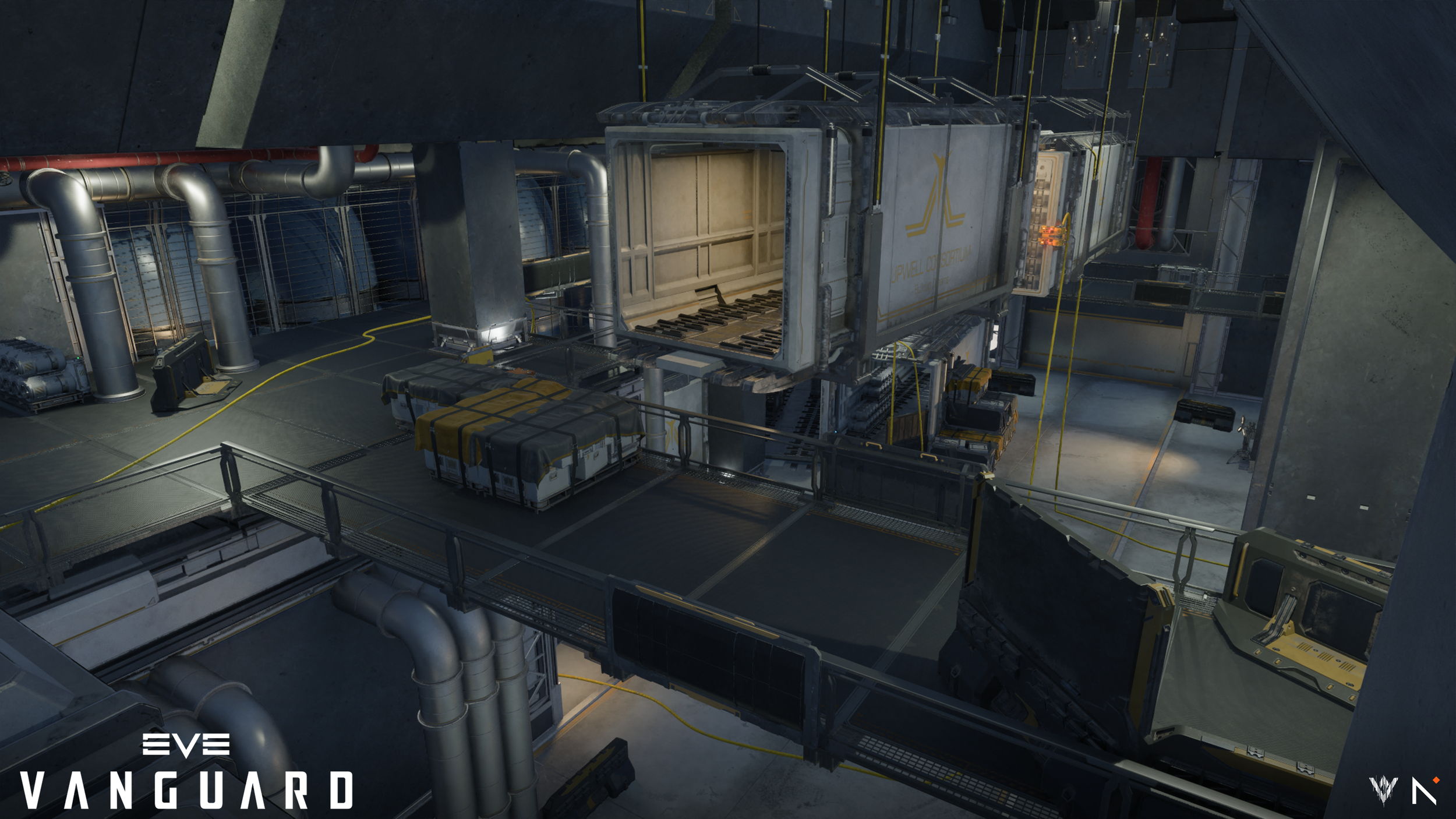
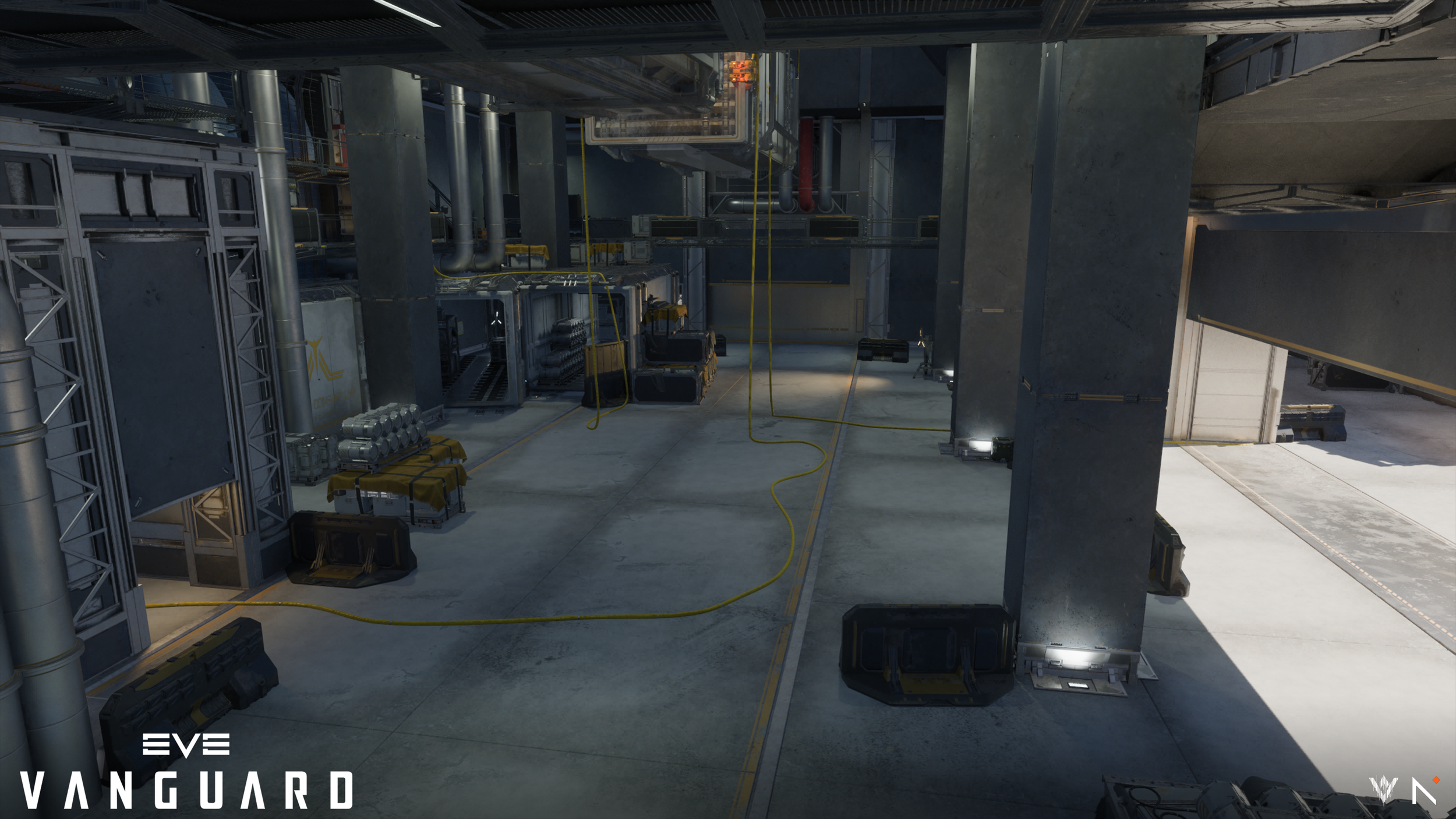
Once the blockouts for POIs and traversal areas were finalized I would then start to collaborate even more closely with the Environment Art and Tech Art teams as they would start meshing the structures and creating detailed landscape deformities. I would review their work to ensure that it remained consistent with the intended design of the spaces and to make sure that level design metrics were not being broken.
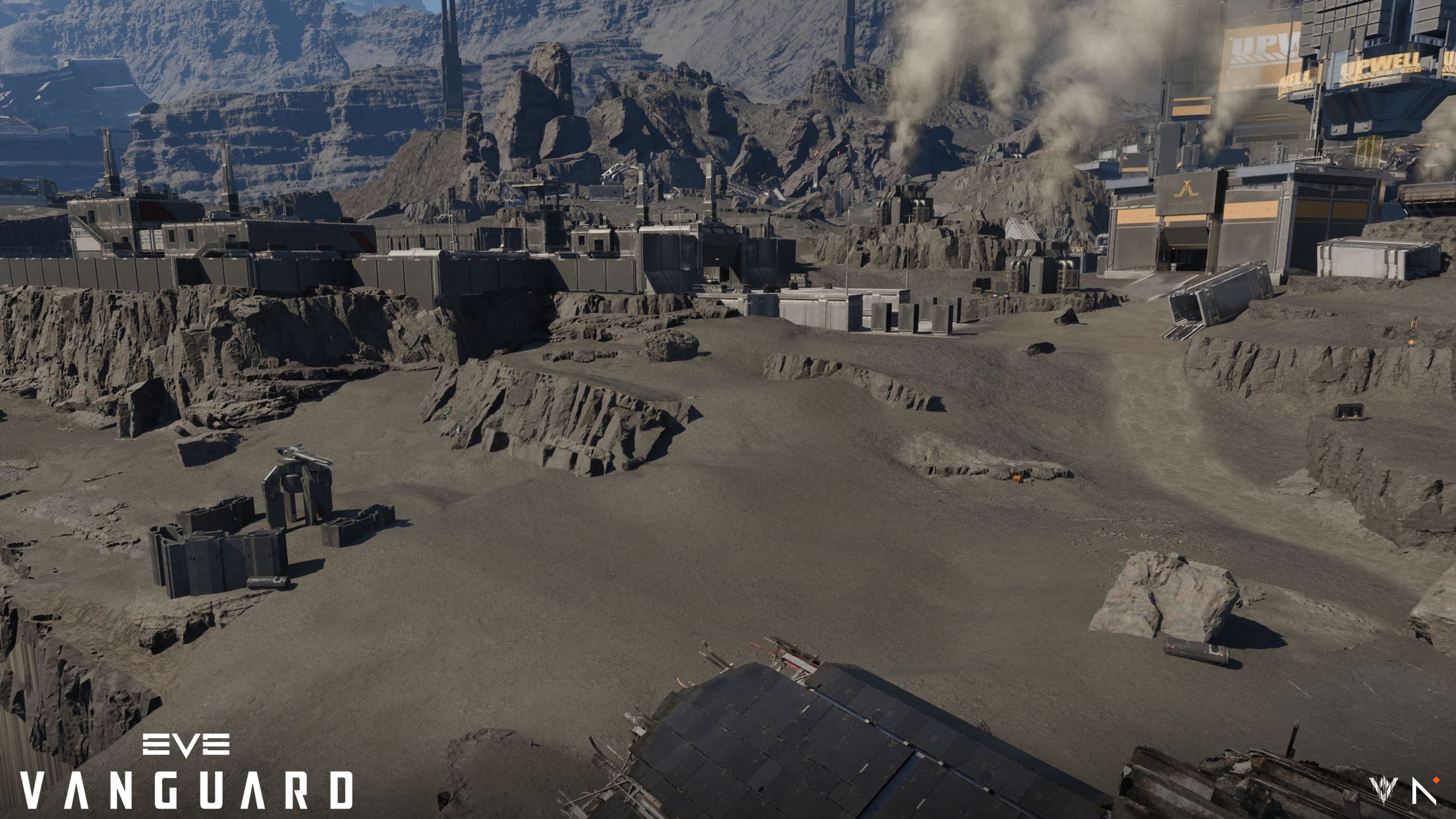
As the art team began working on meshing and dressing the level, I would move my focus over to mission design now that the overall layout of the level was complete. I would connect with the Narrative and Game Design teams as I began implementing the mission assets around the level, playtesting them frequently to get the necessary feedback in order to improve them.
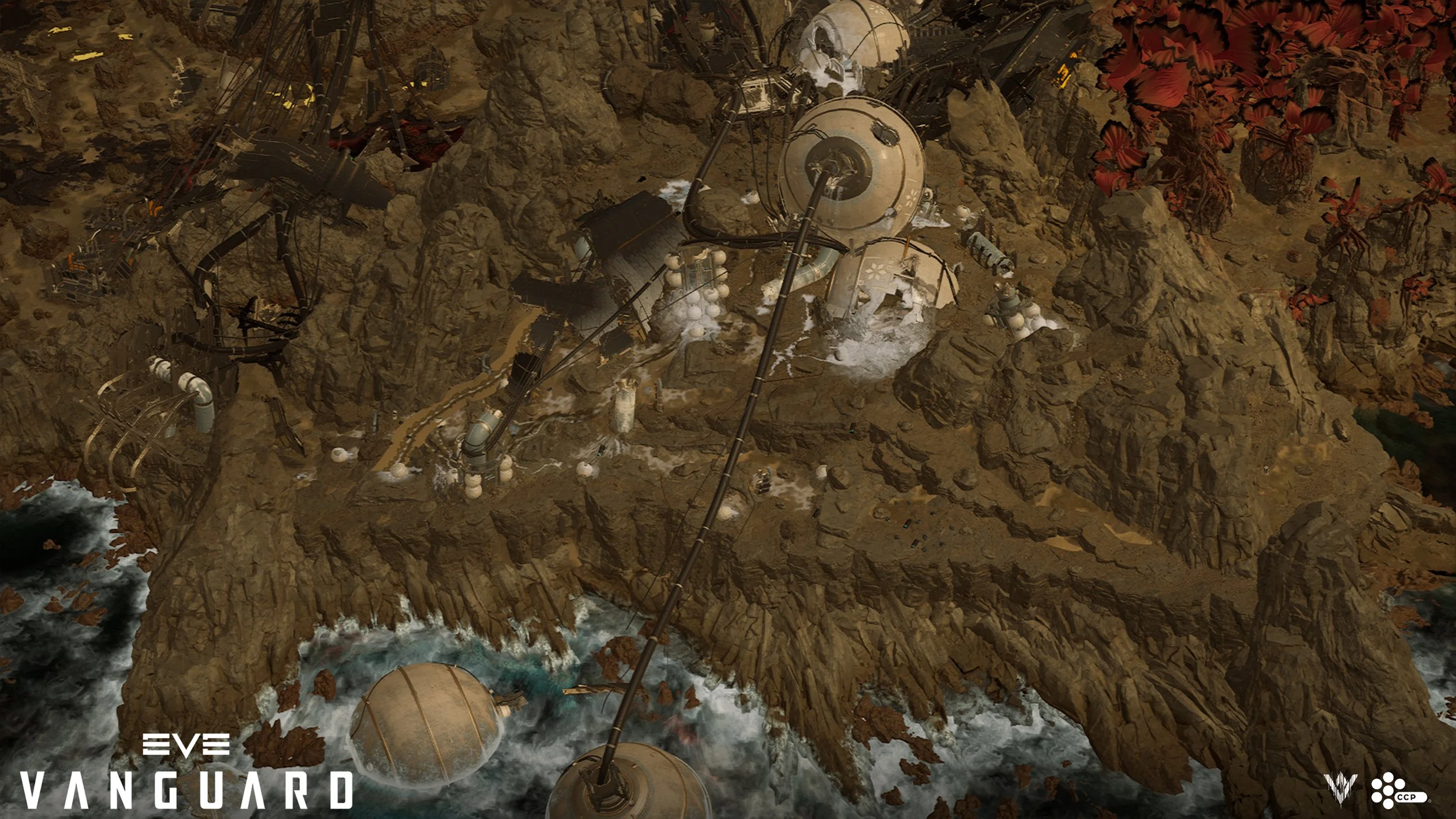
On Solstice, the original design philosophy of our missions was to have each mission with multiple objectives scattered across the entire map. However, through playtesting these missions we discovered that this lead to the missions all feeling quite similar. My solution was to have most of our missions take place in set locations, with only a couple of our missions having objectives spread across the entirety of the map. This led to each mission feeling much more unique, and improved player engagement with the missions substantially.
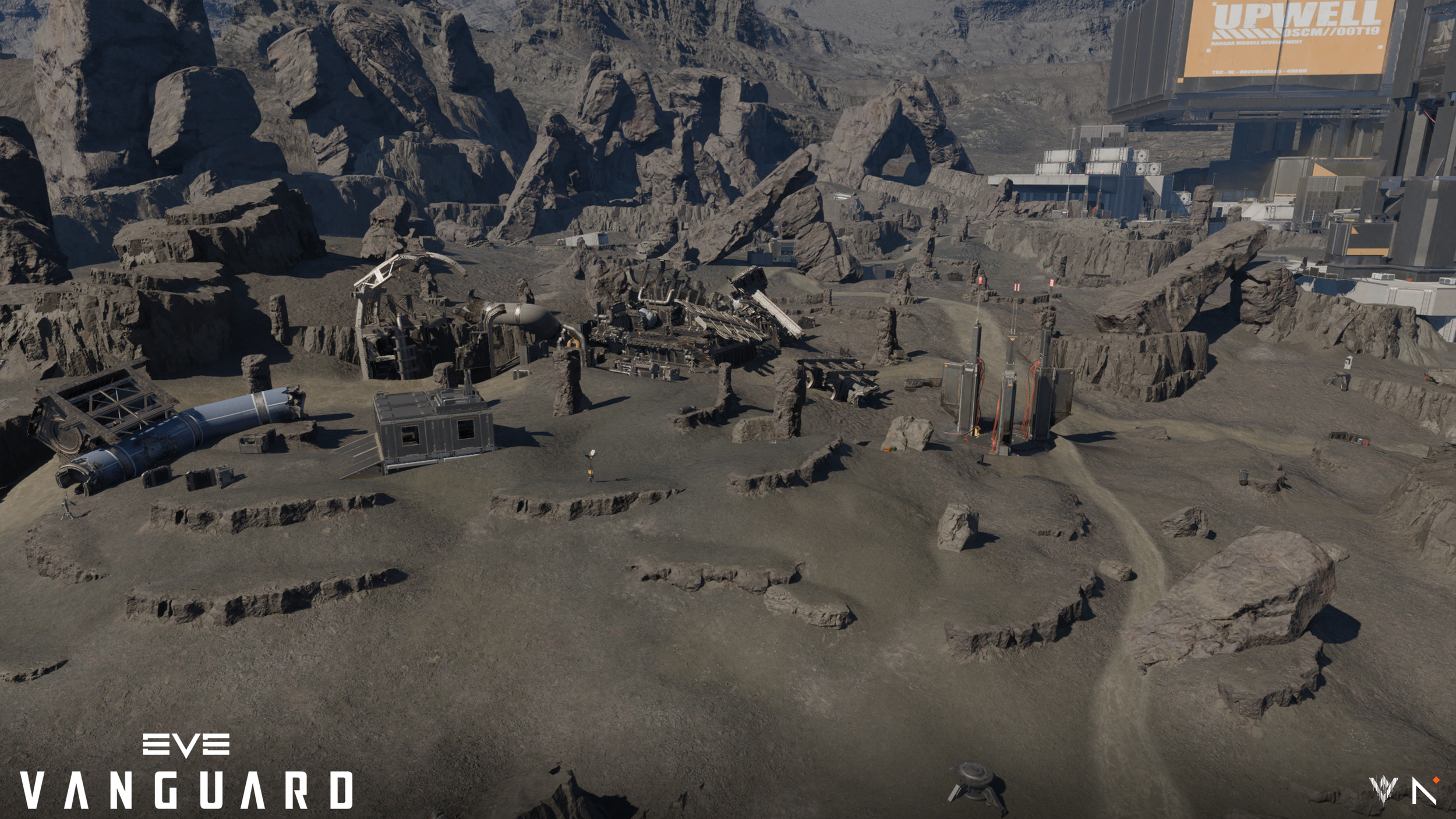
The final steps I always took was to do a focused pass on ensuring that there were no issues with traversal across the maps. I would go through the map with a fine-toothed comb checking for areas that players could get stuck, caught on meshing, or where the landscape had exceeded the maximum traversable slope that had been added with the art team’s dressing pass. As I found these trouble spots I would bug and report them, and spend time fixing as many as I could.